

Most fundraising guides explain what fundraising is. You finish reading and still don't know what to write in an email on Monday morning.
This guide works the other way. It gives you the sequence, the templates, the numbers, and the specific moves for when your round stalls.
It is written for US founders raising a first round. It assumes you know no investors, your traction is smaller than you'd like, and you have four to nine months of runway.
Every resource linked here is free.
This guide runs in five stages. Deciding whether to raise, building the round, running the process, what to do when it goes wrong, and reference material you can come back to.
Start at the readiness check below. Skip to whichever section matches where you are.
Quick readiness check
Answer these six questions first. They tell you whether to raise this quarter or spend two more months preparing.
Can you explain your company in two sentences?
Your non-technical friend should understand completely. This is the first question in every meeting.
Do you have one of these three things?
Something growing, a team that is clearly right for this problem, or an insight nobody else has. One is enough. Zero is not.
Can you say your top three metrics from memory?
Revenue or usage, growth over three months, and burn. Investors will ask.
Do you have four months of runway or more?
Below four months, investors can sense the pressure. Read section 14 first.
Is your cap table clean?
No missing signatures. No departed co-founder holding unvested shares. No verbal promises.
Are you a Delaware C-Corp with 83(b) elections filed?
Every founder had 30 days from their stock issuance. There is no way to fix a missed deadline. Go to section 3 now if you're unsure.
Failed three or more? Spend six to eight weeks fixing them first. That costs you far less than burning your investor list on a process you weren't ready to run.
1. Should you raise money at all?
This section helps you decide whether venture capital fits your company, and shows you what traction investors expect.
What raising money really costs you
Announcing a round feels good. Here is what you actually did. You sold part of your company. You promised to grow fast enough to make that worth it. A clock started running.
Venture capital works in one situation. Your business can get very large very quickly, and money speeds that up.
Plenty of good companies don't fit. Maybe you can already grow on your own revenue. Maybe your business will settle at a few million a year and stay there. Take venture money anyway and you hand over ownership for fuel you never needed.
Look at the full set of funding options before you default to equity. Revenue, grants, debt, and customer prepayments all fund companies every day. Several cost you less than selling equity.
How much traction do you need?
Most guides dodge this question. Here is what investors usually expect at each stage. A strong founder with an unusual insight raises on less.
B2B SaaS, pre-seed.
$0 to $20k MRR. Three to ten paying customers who use the product weekly. At least one customer found you on their own. Investors care about your growth curve more than the size of the number.
B2B SaaS, seed.
$20k to $100k MRR. Growth of 10–20% per month. Retention you can defend. A repeatable way you found your last five customers.
Consumer.
Investors look at usage and retention here. Revenue comes later. Show weekly actives, day-30 retention, and how much of your growth is organic. A product with 40% day-30 retention and no ad spend raises money more easily than one with 100,000 signups and heavy churn.
Marketplace.
Pick one city or category and make it work there. Investors want density in one place. Spreading thin across ten cities works against you.
Deep tech, bio, hardware.
Your traction is technical progress. A working prototype. A validated result. A signed letter of intent from a customer who cannot buy yet.
Pre-launch with none of these? You are raising on team and insight alone. Founders do this every batch. Without a prior exit or deep experience in the field, expect a long, hard process.
What investors currently pay
Round sizes dropped a lot after 2021. Carta's data shows US pre-seed rounds clustering around $1M raised. SAFEs under $250k carried a median cap near $7.5M in mid-2025. Seed rounds ran $3-4M on a pre-money valuation in the mid-teens of millions. AI companies raise above these numbers. Consumer companies raise below them.
Use these as sanity checks. Asking for $5M pre-launch puts you outside the normal range, so you need a reason. Asking for $300k when your milestone needs $1.2M sets you up to raise again in nine months from a weaker position.
Watch this first
Geoff Ralston covers the questions that come before tactics. Why you're raising. What story you tell. Why the best time to raise is when you don't need to.
Source: Fundraising Fundamentals by Geoff Ralston (Y Combinator)
2. Who invests in startups
This section explains the main types of investor, what each one wants, and how fast each decides.
"Investor" covers people with very different incentives. Pitching them all the same way produces contradictory feedback. Founders then conclude the market is irrational.
Angels
Angels invest their own money. Checks run from $5k to $250k. They decide fast, sometimes in one conversation, because they answer to nobody. Many are operators. Their introductions often matter more than their money.
Angels want to believe in you personally. They also invest out of curiosity. This explains a common pattern: a compelling founder with a rough product raises an angel round, then stalls completely with institutional funds.
Start with what an angel investor is and how angels differ from VCs.
Pre-seed and seed funds
These funds write $100k to $2M. They have a thesis, a partnership, and a process. Decisions take weeks. Sometimes longer.
Seed funds can lead your round and set terms. They also bring credibility that helps you raise the next round.
They want a company that can return their whole fund. A $30M fund needs outcomes above $1B. This is why "we'll be a solid $50M revenue business" is a bad answer, even though it describes a good business.
Large multi-stage firms
The big names run seed programs too. Their check signals quality to other investors. It can also be an option they bought on you.
Ask what happens to seed companies that don't get an internal follow-on. The honest answer tells you more than the brand does.
Accelerators
Accelerators sell money, a program, a peer group, and a demo day. Hundreds of investors look at you in one week.
If you have no network, that demo day is the real product. See section 16.
Everything else
Revenue-based financing, venture debt, grants, and crowdfunding all exist. Each fits a narrower situation. Venture debt usually requires equity first. Federal grants are large in deep tech and mostly ignored.
Watch this
Brad Flora explains how early-stage fundraising actually works today. He covers why SAFEs changed the mechanics and what leverage founders have.
Source: How Startup Fundraising Works, Startup School (Y Combinator)
Read this
Paul Graham wrote the best essay on this subject in 2013. Founders still send it to each other. He explains investor psychology, why "maybe" means no, and the traps that eat months.
Source: How to Raise Money by Paul Graham
3. Four legal decisions that cost US founders money
This section covers incorporation, the 83(b) election, QSBS, and securities rules. Two of these have deadlines you cannot undo.
This section covers boring paperwork. Getting any of it wrong is expensive. Treat everything here as general information. Confirm each item with your own attorney and accountant.
1. Form a Delaware C-Corp
Investors buy preferred stock in Delaware C-Corps. Their fund documents, lawyers, and paperwork all assume it.
An LLC cannot issue the security a VC needs. Converting an LLC to a C-Corp later triggers a tax event and a legal bill.
Incorporating in your home state causes smaller headaches. Investor lawyers then have to work with corporate law they don't use daily, and every financing slows down.
Doing this right costs a few hundred dollars on day one. Clerky matches the YC document stack most closely. Stripe Atlas and Firstbase are the other common options. Fixing it later costs thousands, plus weeks, plus a tax question.
2. File your 83(b) election within 30 days
This is the most expensive mistake a US founder can make. Founders make it constantly.
You receive founder stock subject to vesting. You then have 30 days from the issuance date to file an 83(b) election with the IRS. The election means you pay tax now, when the stock is worth almost nothing.
Miss the window and the rules change against you. You pay ordinary income tax as each tranche vests, based on the company's value at that moment. Your company succeeds, and you owe tax on paper gains from stock you cannot sell.
The deadline is strict. The IRS grants no extension. Courts have refused to create an exception. It is one of the few truly unforgiving deadlines in company formation.
Two recent changes help. The IRS released Form 15620 as a standard form for the election. An electronic filing option arrived in 2025 and gives you immediate confirmation. Use it and save the confirmation. Founders used to mail the form and keep no proof.
Already missed it? Talk to a tax attorney about your options. Do not assume someone can quietly fix it.
3. Understand QSBS before you issue stock
Qualified Small Business Stock is why some US founders exit with a large share of their gain excluded from federal tax. The rules sit in Section 1202.
Your stock must come from a domestic C-Corp that meets an asset test. You must also hold it long enough.
The One Big Beautiful Bill Act changed these rules for stock issued after July 4, 2025. The old rules required a five-year hold before any benefit applied. The new structure is tiered. Broadly, you exclude 50% of gain after three years, 75% after four years, and 100% after five. The per-taxpayer cap rose from $10M to $15M and now adjusts for inflation. The company asset threshold rose from $50M to $75M. Stock issued on or before July 4, 2025 stays under the old rules.
Two things follow. Your C-Corp choice shapes your eventual tax bill as well as your fundraising paperwork. And issuance dates matter, so write down when you and your employees received stock.
The full conditions run deeper than this summary. Raise it with your accountant early. Discovering it during an acquisition is too late.
4. Know who you can legally take money from
Selling equity means selling securities. Most seed rounds use a Regulation D exemption. This is why investors ask whether you are raising from accredited investors, meaning people who meet income, net worth, or professional license thresholds.
The friends and family round is where founders get hurt. You take $25,000 from an enthusiastic relative on a handshake. You now have a securities problem, a cap table problem, and a diligence problem. It surfaces two years later at your Series A. Use proper documents, even with people you trust.
General solicitation is the second trap. Advertising your raise publicly, including some social media posts, can change which exemption you can use. Ask your lawyer before you post.
Hire a startup lawyer
One theme runs through all four items. A lawyer who does venture financings weekly catches these in an hour. A generalist who does two a year does not.
Startup counsel will often defer fees until your round closes. Any one of these items going wrong costs you more than years of good legal help.
4. Get your paperwork ready
This section covers the cap table, financials, and data room you need before investors ask.
An investor says yes. Then diligence finds a problem in your paperwork. Momentum dies there.
Cap table
Split founder equity, put it on a vesting schedule, and document it. Four-year vesting with a one-year cliff is standard. It protects everyone, including you.
Did a co-founder leave early while holding a large unvested block? Clean that up now. It will surface at the worst moment otherwise.
Uneven splits work when you have a reason for them. Investors do get nervous when a founder holds 15% of their own company at seed. At that level, nobody believes you will grind for another eight years.
Financials
Keep a monthly view of revenue, burn, runway, and your core usage metric. Skip the five-year projection with a hockey stick. Investors discount projections at seed.
They read your historical numbers. They also check whether the figures you say out loud match the sheet.
Data room
Build it before anyone asks. Include your certificate of incorporation and bylaws, cap table, 83(b) confirmations for every founder, financials, key customer contracts, IP assignment agreements, prior investment paperwork, and founder bios.
IP assignments matter more than founders expect. A contractor wrote part of your product and never signed an assignment. That code may not belong to your company. Diligence will find it.
The same applies to work you did while employed elsewhere. Reread your old employment agreement before an investor's lawyer does.
Send the link within an hour of a request. You then look like a company that runs well. Zyner has a full breakdown of what belongs in a startup data room.
5. SAFEs and the dilution math
This section explains the SAFE, shows you the ownership math with real numbers, and helps you pick a round size.
What a SAFE is
The SAFE is a simple agreement for future equity. YC introduced it in late 2013. The post-money version became standard in 2018.
It is one document. At seed, it has essentially one term to negotiate: the valuation cap.
SAFEs also let you close investors one at a time. An investor is ready to wire, so you sign and take the money. You don't wait for everyone to move together.
Post-money matters because it fixes the investor's percentage the moment you sign. You know exactly what you sold with each check. Pre-money SAFEs left this unclear, and founders discovered at conversion that they had given away far more than they thought.
Download the forms free from YC's documents page. Use them unmodified. Changes cost you weeks and signal inexperience.
Do this math before your first meeting
Here is the calculation first-time founders skip.
You and your co-founder own 50% each. You raise $1.5M on post-money SAFEs at a $10M cap. You sold 15%. You now hold 85% between you, so 42.5% each.
Eighteen months later you raise a $4M Series A at a $20M post-money valuation. Three things happen at once. The SAFEs convert. An option pool gets created or topped up. The new money comes in.
The Series A investor takes 20%. The option pool gets set at 10%. Companies usually carve that pool out of the pre-money, so the dilution lands on you and the SAFE holders. The new investor sidesteps it.
You end up near 30% each. You were picturing 42.5%. Nobody cheated you. This is how the math stacks up.
Now run a worse version. You raised the same $1.5M across six SAFEs at caps between $6M and $12M, because the caps crept up as you went. You sold more than the headline suggests. MFN clauses in the early notes may also pull those investors down to your lowest cap.
The rule: work out your ownership after every single check. Waiting until the round closes is too late. Keep a spreadsheet and update it the day each SAFE is signed.
Kirsty Nathoo is YC's CFO. She works through the real arithmetic with examples. Watch this one if you watch nothing else on this page. Founders lose more equity to this gap than to negotiating a worse cap.
Source: Understanding SAFEs and Priced Equity Rounds by Kirsty Nathoo (Y Combinator)
How much should you raise?
Work backwards from a milestone. Ask what has to be true for your next round to be easy. Work out how long that takes and what it costs. Then add buffer, because it always takes longer.
Most seed founders land on 18 to 24 months of runway.
Say the whole thing out loud in the meeting: "We're raising $1.5M on a post-money SAFE at a $12M cap. That gives us twenty months to get from $30k to $150k MRR."
That sentence proves you thought about it. Vagueness suggests you'll take any number offered.
6. Write your story
This section shows you how to explain your company so an investor can repeat it accurately without you in the room.
Your deck is a container. The story goes inside it.
Here is the part founders miss. The investor in your meeting will describe your company to three colleagues on Monday morning. You are really writing for those three people.
So if your explanation only works with you in the room, it dies in the partner meeting.
The two-sentence test
Kevin Hale's rule is simple. Clarity wins. Write two sentences a smart outsider fully understands. Use no jargon. Then add one specific example.
Weak version: "We're an AI-native workflow orchestration layer for enterprise compliance teams."
Strong version: "Banks check every new customer against sanctions lists. A person does it by hand in about forty minutes. We do it in ninety seconds. First Citizens runs eleven thousand of these a month."
The second version makes worse marketing copy and a much better pitch. It is specific, easy to check, and easy to repeat.
Source: Kevin Hale, How to Pitch Your Startup (Y Combinator)
Size your market honestly
Show your arithmetic. Count your potential customers. Multiply by what they would realistically pay. That is your market.
Investors have seen thousands of slides claiming a $50B market from an analyst report. They discount all of them.
A clear bottom-up calculation landing at $4B persuades far more than a vague one landing at $50B.
Zyner's guide to startup storytelling goes deeper on making this memorable.
7. Build your pitch deck
This section lists the slides that earn their place and explains why design affects your credibility.
Use ten to fifteen slides. Make it readable without you. Send it as a PDF.
The slides you need
Title. Company name, one-line description, contact details.
Problem. Who has it, how often, and what it costs them today.
Solution. What you built and how it works. Use a screenshot. Diagrams explain less.
Why now. Something changed. Name it.
Traction. Real numbers with dates. Show a chart across several months. One headline figure tells them less.
Market. Bottom-up, arithmetic shown.
Business model. How you charge, what a customer is worth, what one costs to acquire.
Competition. Name real competitors. Explain your difference in one sentence. Claiming you have none tells investors you didn't look.
Team. List what each person built. Job titles say very little. "Built the fraud system handling 40% of Stripe's volume" tells an investor far more than "Senior Engineer at Stripe."
The ask. Amount, instrument, cap, runway, and milestones.
Zyner has separate guides on what each slide should contain, how long a deck should be, and the mistakes that get decks deleted. Starting from nothing? The pre-seed pitch deck templates give you a structure.
Design affects your credibility
An investor judges your competence in the first few seconds of opening the file. Every investor does this. Design your deck for that reality.
Inconsistent fonts, stretched logos, and dense grey paragraphs signal a team that ships sloppily.
Aim for legibility. Put one idea on each slide. Write headlines that state the point.
"Retention is 91% at month six" is a headline. "Retention" is a label.

Source: How To Perfectly Pitch Your Seed Stage Startup With Michael Seibel (SaaStr)
8. Find investors when you know nobody
This section gives you a six-step workflow for building an investor list from zero, plus advice if you're outside a major startup hub.
Most guides skip this part. It is the part founders are actually stuck on.
Step 1: Find twenty companies that look like you
Don't look for competitors. Look for companies one or two stages ahead of you, in your sector, selling to your buyer.
You sell compliance software to regional banks. So find companies that sell anything to regional banks and raised seed in the last two years.
Include companies outside your city. Most seed funds invest across the country.
Step 2: Pull their investor lists
Every one of those companies announced their round somewhere. Check Crunchbase, the company blog, TechCrunch, and the fund's portfolio page.
Write down every fund and every named angel. Twenty companies usually give you sixty to a hundred names. These names are pre-qualified, because each one already wrote a check into something adjacent to you.
Add names from the YC investor directory, Signal by NFX, and OpenVC. Zyner covers the mechanics in where to find angel investors, building a database of angel investors, and finding angels on LinkedIn. Very early? The pre-seed angel pool behaves differently and deserves its own list.
Step 3: Qualify every name
Record six things per investor. Stage, check size, sector, whether they lead rounds, their most recent relevant investment, and any portfolio conflict.
Twenty minutes each prevents the meeting where someone tells you they don't do pre-seed. Delete anyone who doesn't fit. Sending the email anyway wastes both your time.
Step 4: Find your path in
Work down this ladder for each target. The order matters.
Someone you already know.
Check your LinkedIn second-degree connections against your list. You will find more than you expect.A founder in their portfolio.
This is your best move. Portfolio founders have a direct line, and the investor reads their emails. Email the founder first.Someone from your past.
University, a former employer, an open source project, a community.A customer or advisor.
Your customer's executive may know investors. Ask.Cold, direct.
Founders raise real money this way every month. Expect a lower reply rate and send more of them. Zyner's guide to contacting angel investors covers which channels people actually read.
Step 5: Tier and sequence your list
Sort investors into three tiers.
Tier 3 is your practice round. You would take their money. They are not your first choice. Start there and let them break your pitch. Then fix what breaks.
By the time you reach tier 1, they get your seventh version.
Step 6: Track everything
A spreadsheet works fine. Record the investor, firm, path in, date contacted, status, next action, and next action date.
Fundraising fails on follow-up far more often than it fails on pitching.
If you're not in the Bay Area or New York
Most US seed capital still sits in a few metros. Most of it now invests remotely as a matter of routine. Being in Columbus or Nashville costs you less than it used to.
Do three things differently.
Work regional funds first.
Almost every metro has seed funds with a local mandate. They are far less competitive than the coastal names. They also lead rounds, which is the hardest thing to find. Get your lead there, then bring coastal funds in behind it.
Use a trip as your deadline.
Book one packed week with 12–20 meetings. One good week does more than four months of scattered Zoom calls. Book the flights once you have eight meetings confirmed. Then say it: "I'm in SF the week of the 14th and would love to meet while I'm there." Now they have a reason to move.
Treat your location as an advantage.
Your burn is lower. Your engineers stay longer than fourteen months. You understand customers the coastal companies never meet. Say those things. Founders who open with "we're in Detroit but we plan to relocate" hand over a weakness nobody asked about.
Also spend twenty minutes on state and regional non-dilutive money. Many states run matching funds, tax credits, or grants for technology companies.
9. Email templates that work
This section gives you four templates: an intro request, an investor cold email, a founder cold email, and a follow-up.
Keep all of them short. That is the whole point.
Asking someone for an introduction
Most founders ask "can you introduce me to Sarah?" and leave the connector to write the email. Do the work for them instead.
Hi James,
Quick ask. I saw you're connected to Sarah Chen at Lightfoot. We're raising a $1.2M pre-seed. She's invested in two companies in adjacent spaces, so I think there's a real fit.
Would you be up for a forwardable intro? I've written something below you can paste. Feel free to rewrite it or say no.
Sarah, meet Priya, founder of Kestrel. They automate sanctions screening for mid-market banks. Three banks are live, $18k MRR, growing about 30% per month since March. Priya was previously compliance lead at Chime. She's raising a $1.2M pre-seed and I thought this sat squarely in your wheelhouse.
Priya, Sarah invests at pre-seed out of Lightfoot and led the round in Verifi last year.
The forwardable paragraph is the deliverable. Make your connector write anything and the intro happens a week later, or never.
Cold email to an investor
Keep it under 150 words. It has one job: earn a thirty-minute meeting. It does not need to explain the market, the vision, or the roadmap.
Subject: Kestrel, sanctions screening for mid-market banks (raising pre-seed)
Hi Sarah,
Banks screen every new customer against sanctions lists by hand. It takes about forty minutes each. We do it in ninety seconds.
Three banks are live. $18k MRR, up from $4k in March. Two came inbound.
I ran compliance at Chime for three years and built the internal version of this. My co-founder built risk infrastructure at Plaid.
We're raising $1.2M on a post-money SAFE. That takes us to $80k MRR and the SOC 2 audit trail that unlocks banks above $10B in assets.
I'm writing to you because you led Verifi's seed. Worth thirty minutes?
Deck attached.
Priya
Look at what this email leaves out. No "hope this finds you well." No market size. No vision paragraph. No attachments beyond the deck.
It does include numbers with dates, a specific reason you emailed this person, and a clear ask.
Zyner's guide to cold emailing investors has more variants and subject lines.
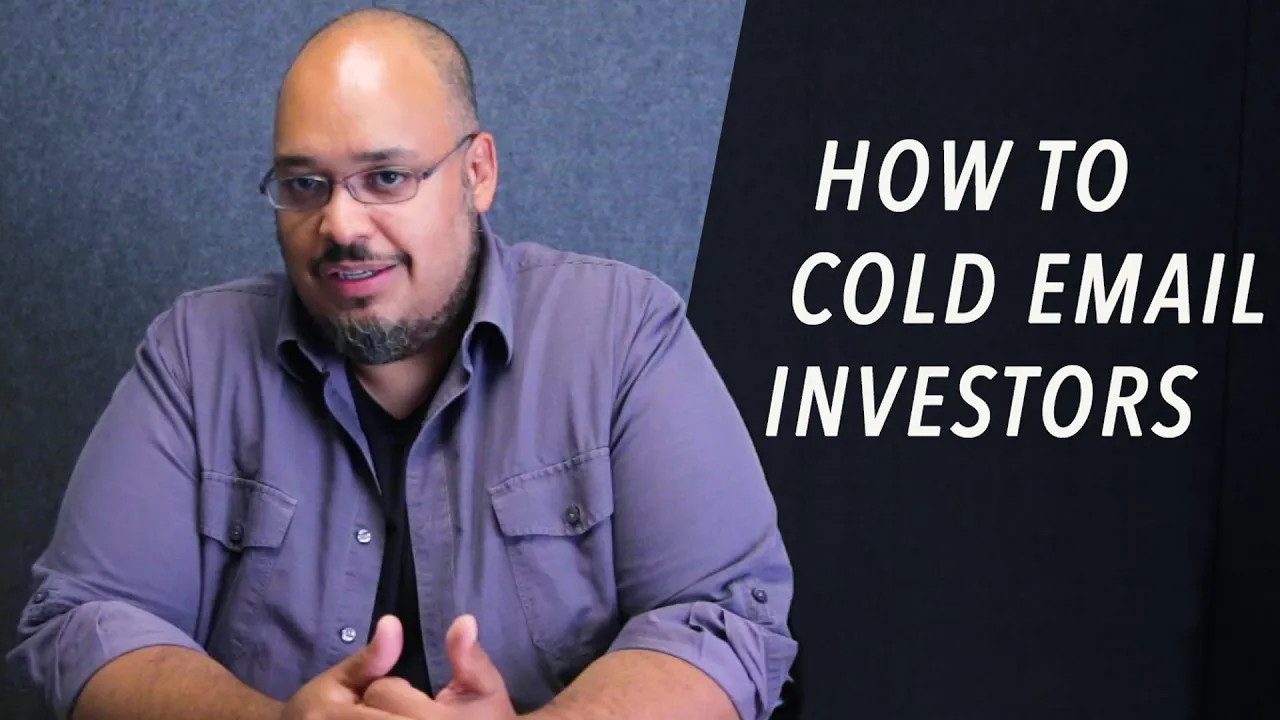
Source: How To Cold Email Investors, Michael Seibel (Y Combinator)
Cold email to a portfolio founder
Write this one differently. You are a founder asking another founder for two minutes of help.
Subject: Question about raising from Lightfoot
Hi Tom,
I'm building Kestrel, sanctions screening for mid-market banks. Three banks live, $18k MRR.
I noticed Lightfoot led your seed. We're starting a pre-seed and they look like a strong fit. I'd rather not waste Sarah's time if the stage is wrong. Were they comfortable at pre-seed, or did they want you further along?
Happy to return the favor any time. I know the compliance buyer well if that's ever useful.
Priya
You asked a real question. You did not ask for an introduction.
Many founders will answer, then offer the introduction themselves. That version carries far more weight than one you requested.
The follow-up sequence
No response after a meeting? Follow up on day 4, day 10, and day 21. Then stop and move them to your monthly update list.
Put real news in your day-10 email. A bare check-in gets ignored.
Hi Sarah,
Quick update since we spoke. We signed our fourth bank on Tuesday, which takes us to $24k MRR. We also passed our SOC 2 audit about six weeks earlier than expected.
We now have $500k of the $1.2M committed and I'd like to close by the end of March. Still keen to have you involved if the timing works.
Priya
Three lines. News, momentum, deadline.
10. Meetings and the questions investors ask
This section covers how to run a first meeting, the twelve questions that come up, and how to read the signals.
Most first meetings run thirty minutes. Spend five minutes on the pitch and twenty-five in conversation.
A good meeting sounds like an argument. The investor talks, interrupts, and pushes back. In a bad meeting they sit quietly while you present fifteen slides.
The questions, and what good answers sound like
"What do you do?"
Two sentences, no jargon, then a specific example. Get this wrong and you spend the next twenty-five minutes recovering.
"Why you?"
Be specific. Say something like "I spent three years watching compliance teams do this by hand at Chime, then built the internal version." A line like "we're passionate about fintech" tells them nothing.
"Why now?"
Name what changed. A regulation, a cost curve, a platform, a behavior. If nothing changed, say so and explain why nobody took the opportunity.
"How did you get your last five customers?"
They want to know if you have a repeatable channel or five lucky introductions. If it's introductions, say so, then say what you're testing next.
"What's your retention?"
Know the number. If it's bad, give the number and your plan. Investors have seen bad early retention many times. They have less patience for founders who don't measure it.
"How big can this get?"
Give bottom-up arithmetic, then the expansion path. Skip the analyst report number.
"Who else is doing this?"
Name real competitors. Include the incumbent's internal team and the spreadsheet your customer uses today. Then state your difference in one sentence.
"What would you do with $2M?"
Give milestones, headcount, and a timeline. Not "hire a team and grow."
"What's the biggest risk?"
Answer honestly. This tests character more than analysis. A candid discussion of a real obstacle persuades far more than dismissing it. YC's own interview guidance makes this exact point.
"Who's leading the round?"
See section 11. The right answer depends on where you actually are.
"How much runway do you have?"
Give the real number. They will find out.
"Why is your co-founder the right co-founder?"
Founder conflict kills more seed companies than competition does. They are probing.
Don't know something? Say so, then say when you'll find out. Then find out and send it the same day.
They are partly testing whether they can trust you with information for the next decade.
Prepare against the questions angels reliably ask. Read up on what to expect in a first VC meeting so the format doesn't surprise you.
Reading the signals
Good signals look like this. They bring in a colleague. They ask about terms. They ask when you're closing. They introduce you to a portfolio founder. They push back hard on something specific.
Some bad signals sound encouraging. "This is really exciting." "Keep us posted." "Let's stay in touch." "Come back when you have a lead." All four mean no.
Log them, move on, and add the person to your monthly update.
One version is worth chasing. An investor says "come back when you hit X," X is specific and achievable, and they say they'll invest if you hit it. Confirm that in writing the same day.
11. What to do when your round stalls
This section covers timing, why parallel meetings matter, and six specific moves when you're stuck at 40% with no lead.
Fundraising takes your whole attention
You are either fundraising or you are not. Half attention on the raise and half on the company produces a bad round and a stalled company.
Block the window. Tell your team. Hand off what you can.
Expect real timelines. Reported data puts a typical pre-seed or seed round at 12 to 16 weeks from first meeting to money in the bank. The intense window runs 6 to 10 weeks. Founders who land a lead early close much faster.
Run meetings in parallel, never in sequence
Talk to investors one at a time and each one knows they can take as long as they like. You lose all your leverage.
Batch your outreach so first meetings land in the same two weeks. Competition for your deal is the only thing that reliably turns a maybe into a wire.
Stuck at 40% with no lead
This is the most common failure state. It has specific moves.
Reframe the ask.
A $1.5M round needing a $750k lead is a different product from a $1.5M round of $100k checks with no lead. You have $600k from angels and no institutional interest? Consider running it as a party round on SAFEs. Many strong companies raise pre-seed with no lead at all.
Create a real deadline.
Not a fake one. "We're closing on the 28th because we're signing the office lease." Or "I'm in SF the week of the 14th." Investors respond to constraints that exist without them.
Use your committed money as the pitch.
"We have $600k committed from [credible named angel] and we're closing $1.5M on the 28th" opens a completely different conversation. SAFEs help here, because each closed check banks immediately.
Go back to near-misses with news.
Anyone who said "come back when" gets an email the moment you have the thing.
Reduce the round size.
A closed $800k round is worth more than an open $1.5M one. Cut the milestone to match. Be honest with yourself about what you gave up.
Check whether the pitch is the problem.
Twenty first meetings and no second meetings points at your pitch. Stop blaming the market. Ten second meetings and no checks means something specific fails in diligence. Ask three investors who passed for the real reason. Frame it as "I'm trying to get better at this, what actually made you pass?" Some will tell you.
Take early money greedily
At pre-seed and seed, take money when someone offers it.
Founders who hold out for a better cap while a signed check waits usually lose the check. They rarely improve the terms.
Optimize for closing early. Optimize for partner quality at Series A and beyond.
Paul Graham's High Resolution Fundraising explains why closing investors one at a time, at different caps, works better than waiting for everyone to move together.
12. Terms worth pushing back on
This section lists the specific terms that should make you ask questions at seed stage.
A standard post-money SAFE has one real term: the cap. Someone hands you a document with more than that? Look for these.
Board seats at pre-seed.
Almost never appropriate for a seed check. A board observer is more reasonable, and even that is negotiable.
Super pro rata rights.
This lets an investor take more than their proportional share of your next round. It can crowd out the lead you want at Series A. Standard pro rata is normal and fine.
Full ratchet anti-dilution.
Aggressive at any stage. Unusual at seed. Broad-based weighted average is the standard.
Participating preferred.
The investor gets their money back and their equity share. At seed, this is a red flag.
Liquidation preference above 1x.
Anything above 1x non-participating at seed deserves a hard question.
No-shop periods longer than about 30 days.
This freezes your process while they decide.
Information rights that work like a veto.
Agree to send regular reports. Refuse approval rights over ordinary operating decisions.
Accelerator terms with fees or downside enhancements.
Deduct any fee from the headline investment when comparing programs. YC's standard deal page says it charges no fees and avoids enhanced returns on downside exits. That makes it a useful benchmark for reading anyone else's paperwork.
Hire a lawyer who does startup financings routinely. A generalist costs you more in time than they save in fees.
Venture Deals by Brad Feld and Jason Mendelson is the reference text. Read it before you sign anything priced.
13. Closing, and your first year after
This section covers diligence, wire safety, and the monthly investor update that funds your next round.
Diligence and wires
An investor commits. They then want the data room, references, and sometimes customer calls. Move fast. Send documents the same day.
With standard YC documents, signature to wire takes a few days.
Confirm banking details by phone through a channel you've used before. Wire fraud at startup closings is common and specific. An attacker reads your email thread, then sends revised wire instructions at exactly the right moment. Verify before anyone sends money.
The monthly investor update
Send one every month, starting the month after your round closes.
This is the highest-return habit in early-stage company building. The investors who fund your next round are usually already on your list, watching you execute for a year.
Your bridge money comes from this list too, if things get tight. Founders who go quiet for eight months and then ask for money wait a long time for an answer.
Keep it to one screen.
Kestrel, March update
TL;DR: $31k MRR (up from $24k), 5 banks live, SOC 2 done, hiring a second engineer.
Metrics MRR: $31k (+29%) Live customers: 5 Net revenue retention: 108% Burn: $22k/mo · Runway: 14 months
What went well SOC 2 Type II landed six weeks early. That unlocks the $10B+ asset banks sooner than planned.
What didn't Our sales cycle with larger banks is running 90 days, not the 45 we assumed. We're adjusting the pipeline model.
Asks
Intros to heads of compliance at regional banks and credit unions.
Anyone who has hired a senior backend engineer with fintech experience in Austin.
Priya
Founders always want to delete the "what didn't" section. Keep it. Investors who only ever see good news stop believing any of it.
14. When fundraising fails
This section covers low runway, bridge rounds, co-founder strain, repeated rejection, and knowing when to stop.
You have four months of runway and no round
Cut burn this week. Going from four months of runway to eight does more for your position than any pitch improvement. Nobody enjoys making these cuts. Make them.
Then choose honestly between three paths. Close a smaller round fast. Raise a bridge from existing investors. Or get to profitability and stop raising.
Bridge rounds
A bridge means going back to existing investors for a smaller amount to reach a milestone. Most bridges happen on a SAFE, often with a discount to your next round.
Ask for a bridge when you have one clear milestone close by. Asking because you want more time gets you a no. Experienced investors spot the difference immediately.
Ask early. An investor with three months of visibility can help you. One with three weeks mostly cannot.
Your co-founder is losing faith
This happens more often than any guide admits. It is usually the real reason a round dies.
Fundraising means months of rejection while your product stalls. That strains founding teams badly.
Three practical moves help. Split the work so one founder owns the raise and the other keeps shipping. Agree in advance what "we stop and reconsider" looks like, so you make that call together. Talk about it every week. Waiting for a crisis makes it much worse.
Solo? Find two other founders raising at the same time and speak to them every week. Isolation is what breaks founders. Most people handle the rejection fine once someone else understands it.
Sixty rejections
This is normal. Founders routinely report fifty or more meetings before a first yes.
Most rejections tell you very little about your company. They come down to fit, timing, thesis, and a lot of random chance.
One thing does tell you something: a repeated reason. Six investors independently saying your market is too small is a signal worth acting on. Six different reasons is just noise.
Knowing when to stop
You ran a real process. You talked to eighty qualified investors. You have nothing.
Sometimes the answer is that this company does not raise venture money. Your company has not failed. It needs a different way of funding itself.
Some of those businesses become good, profitable companies once the founder stops forcing the venture shape onto them. Others need a pivot.
15. How your industry changes the rules
This section covers what changes for deep tech, bio, consumer, marketplace, and fintech founders.
B2B SaaS.
Most advice on this page assumes your company. Revenue and retention tell the story.
Deep tech and hardware.
Horizons run longer and capital needs run higher. Technical milestones replace revenue. Federal non-dilutive money is widely available and widely ignored. SBIR and STTR grants through the NSF, NIH, DOE, and DoD fund exactly this stage and take no equity. Your investor list will be shorter and more specialized.
Bio and health.
Your regulatory pathway is the story. Investors are specialists. Timelines run long. Generalist seed funds will mostly pass regardless of quality.
Consumer.
Retention and organic growth carry the pitch. Consumer is notoriously hard to raise for at seed, because early numbers swing and outcomes cluster at the extremes.
Marketplace.
Prove liquidity in one narrow slice. The classic failure shows national coverage with density nowhere.
Fintech.
Investors will interrogate your regulatory approach, unit economics, and fraud exposure harder than your product.
16. Accelerators and Y Combinator
This section explains what accelerators sell, the current YC deal, and the six free YC resources worth working through.
Accelerators compress the whole process. You get money, a program, a peer group, and a demo day where hundreds of investors look at you in one week.
No network, or building outside a major hub? That demo day is the actual product.
The YC deal
The current standard deal is $500,000. YC invests $125,000 on a post-money SAFE for a fixed 7%. It invests another $375,000 on an uncapped MFN SAFE, which converts on the terms of the lowest-cap SAFE you issue afterward.
YC charges no fees. It takes pro rata rights in later rounds.
YC says over 10,000 companies apply per batch and it accepts roughly 1%. That acceptance rate is why a YC badge carries weight. Work through the free material below before you apply.
Work through these six, in order
YC Startup Library. The full archive of partner talks, founder interviews, and essays. Free, searchable, and probably the best startup content library that exists.
How to Apply and Succeed at YC. Dalton Caldwell ran YC admissions for years and is now Partner Emeritus. He explains how the decision actually gets made. Watch it before you write a word of your application. <iframe width="560" height="315" src="https://www.youtube.com/embed/B5tU2447OK8" title="How to Apply And Succeed at Y Combinator | Startup School" frameborder="0" allow="accelerometer; autoplay; clipboard-write; encrypted-media; gyroscope; picture-in-picture; web-share" referrerpolicy="strict-origin-when-cross-origin" allowfullscreen></iframe> Source: How to Apply And Succeed at Y Combinator, Startup School (Y Combinator)
The YC Interview Guide. Read it carefully. Its main instruction surprises people: don't rehearse. YC says mock interviews and prepared presentations work against you. It says the best way to improve your odds is to ship real progress between applying and interviewing. Understanding the review process removes most of the anxiety.
The Application Video Guide. YC's instructions plus four real videos from companies that got in, including Zenefits and Teespring. One minute, founders only, no script, bullet points. Zyner's YC application video guide covers what makes the good ones work.
Co-Founder Matching. Free, and worth using if you're solo. Read Zyner's data on YC and solo founders first.
Successful applications, annotated. Read the real applications from Dropbox, GitLab, and Mixpanel. They teach you more about tone than any advice can. Notice how short and plain the answers are.
Also useful: the application deadline structure, the fact that there's no limit on how many times you can apply, and how Demo Day works.
Techstars and others
Techstars runs city and vertical programs on a mentor-driven model. That format suits some founders better, especially outside pure software. Their demo day and application deadlines follow a different cycle.
Comparing offers? Deduct any fees from the headline investment. Check for downside terms. Weigh the network against the equity. A program taking 10% for $100k is expensive unless that network genuinely fits your situation.
17. Books, essays, and videos
Everything worth reading, in the order to read it.
Books
Venture Deals by Brad Feld and Jason Mendelson. The reference on term sheets, valuations, and negotiation. Read the liquidation preference and control chapters before you sign anything priced.
Secrets of Sand Hill Road by Scott Kupor. Explains venture capital as a business. Fund structure, LP pressure, and why those change how a partner behaves in your meeting. Most founders never learn this and negotiate worse for it.
The Hard Thing About Hard Things by Ben Horowitz. Not a fundraising book. An honest account of what you signed up for.
Zyner's list of startup books worth reading covers more.
Essays and documents
How to Raise Money, Paul Graham
High Resolution Fundraising, Paul Graham
A Guide to Seed Fundraising, Y Combinator
YC Safe Financing Documents, the forms plus worked conversion examples
The YC Standard Deal, a benchmark for any accelerator offer
Videos, in order
Fundraising Fundamentals, Geoff Ralston
How Startup Fundraising Works, Brad Flora
Understanding SAFEs and Priced Equity Rounds, Kirsty Nathoo
How to Pitch Your Startup, Kevin Hale
How To Cold Email Investors, Michael Seibel
How to Apply and Succeed at Y Combinator, Dalton Caldwell
18. The most expensive mistakes
Raising before anything works.
Deck polish cannot replace a graph going up.
Treating "maybe" as progress.
It means no. Log it and move on.
Running meetings in sequence.
This kills your leverage. Batch them.
Not knowing your own numbers.
Disqualifying, and completely avoidable.
Chasing a higher cap while the round sits open.
An extra $2M on the cap is worth very little if the money never arrives.
Ignoring stacked dilution.
Six SAFEs at different caps plus an option pool will surprise you at Series A.
Building a deck that needs narration.
It gets forwarded without you.
Missing the 83(b) window.
Thirty days, no cure, and possibly the most expensive administrative error available to you.
Waiting until two months of runway to ask for help.
Your investors can act at four months. At two, most cannot.
Going quiet after you close.
Your next round sits on the list you stopped emailing.
19. A 12-week timeline
Weeks 1–2.
Clean the cap table. Build the data room. Write the story. Finish deck v1. Get your list to 100 qualified, tiered names. Identify a path in for every tier 1 name.
Weeks 3–4.
Take tier 3 meetings. Expect your pitch to break. Rewrite it twice. Fix whatever three separate investors flag independently.
Weeks 5–8.
Take tier 1 and 2 meetings, batched so they overlap and news travels. Follow up within 24 hours every time. Your first checks should land here.
Weeks 9–12.
Close what you have. Sign, wire, repeat. Still stalled? Go to section 11. Adding more names won't fix it.
Week 13 onward.
Send your first investor update.
On an accelerator track, their deadlines set your calendar. The preparation window is where your work happens.
Common questions
What is the difference between a SAFE and a convertible note?
A convertible note is debt. It carries an interest rate and a maturity date. Reach that date without raising a priced round and the note comes due, which means the investor can ask for their money back.
A SAFE carries no interest and never matures. Both instruments turn into equity when you raise a priced round. Most US seed rounds now use SAFEs, because nobody wants a repayment deadline hanging over a company that is still finding its footing.
How much equity do founders give up in a seed round?
Plan on 15% to 25% across your pre-seed and seed rounds combined. Raising $1.5M on a $10M post-money cap sells 15% on its own.
The number climbs at your Series A, when those SAFEs convert at the same moment a new option pool gets created. Section 5 walks through a worked example where two founders go from 42.5% each down to roughly 30%.
How long does it take to raise a seed round?
Budget 12 to 16 weeks from your first investor meeting to money in the bank. The intense stretch runs 6 to 10 weeks inside that. Founders who land a lead investor in the first month close much faster than founders who don't.
Add another four to six weeks in front for building your list, cleaning your cap table, and fixing your deck.
Can you raise venture capital without a co-founder?
Yes. Solo founders raise seed rounds every year. Investors will press harder on your hiring plan, and a few funds skip solo founders as a matter of policy.
YC runs a free co-founder matching platform if you decide you want one. Zyner has the data on how solo founders perform in YC batches.
Should you tell investors that other investors passed?
Never volunteer a list of names. Answer honestly if someone asks you directly, then say what you learned and what you changed as a result.
Investors talk to each other constantly, so an invented answer surfaces quickly. A founder who says "the first eight passed on our pricing model, so we rebuilt it" sounds like someone who listens.


