

Most startup book lists exist to fill a blog post and generate affiliate revenue. They recommend the same 10 titles in a different order and call it a day.
This one is different.
Every startup book on this list was chosen for one reason: the ratio of actionable insight to pages read. No motivational fluff. No biographies where the main lesson is "be as talented as this person." Just the books that give you frameworks, tools, and honest perspective you can put to work this week.
As of 2026, the best startup books span five domains that matter most to early-stage founders: understanding your market, building and fundraising, positioning and growth, founder mental health, and the often-ignored question of when to stop. The list below covers all five.
Quick Takeaways
The Lean Startup and The Mom Test are non-negotiable reads before you build anything
Zero to One is the best mindset primer; Venture Deals is the best fundraising prep
Lost and Founder and Reboot belong on every founder's shelf, not just the ones struggling
Reading order matters: the right book at the wrong stage wastes your most valuable resource by time
At least two of the most useful startup books on this list rarely appear on competitor roundups
The Best Startup Books: Quick Reference List
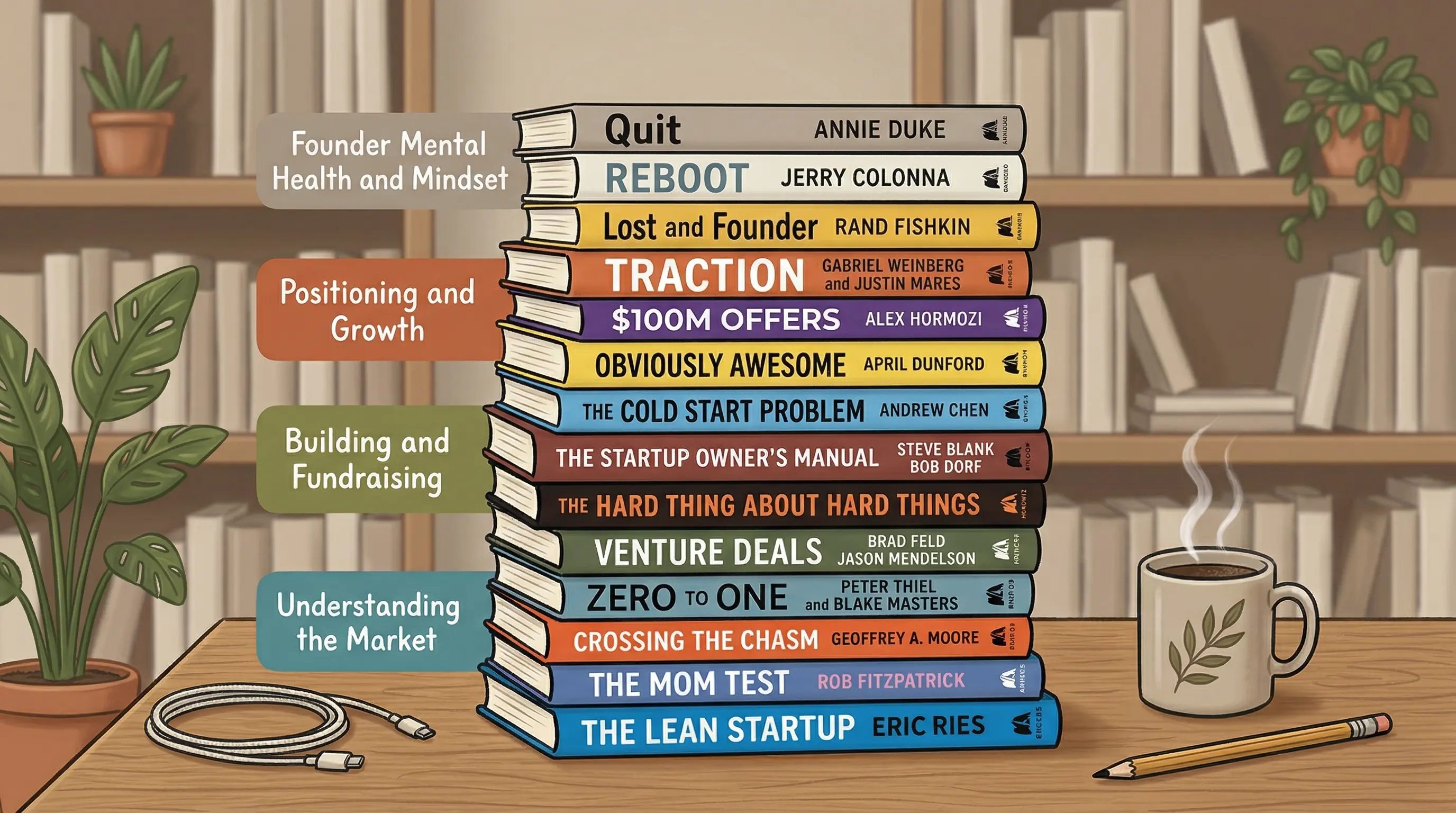
Here are the 15 best startup books for founders, grouped by category:
Understanding the Market
The Lean Startup by Eric Ries
The Mom Test by Rob Fitzpatrick
Crossing the Chasm by Geoffrey A. Moore
Zero to One by Peter Thiel and Blake Masters
Building and Fundraising
Venture Deals by Brad Feld and Jason Mendelson
The Hard Thing About Hard Things by Ben Horowitz
The Startup Owner's Manual by Steve Blank and Bob Dorf
The Cold Start Problem by Andrew Chen
Positioning and Growth
Obviously Awesome by April Dunford
$100M Offers by Alex Hormozi
Traction by Gabriel Weinberg and Justin Mares
Founder Mental Health and Mindset
Lost and Founder by Rand Fishkin
Reboot by Jerry Colonna
Quit by Annie Duke
Bonus Read
The Founder's Dilemmas by Noam Wasserman
How We Picked These Books
Every title on this list clears three bars. First, it has to be written by someone who has actually operated inside the chaos of building something from nothing, not a consultant who studied other people doing it. Second, the insights have to translate into immediate behavior change. If you finish a chapter and don't know what to do differently tomorrow, it failed. Third, the book has to hold up across multiple re-reads at different stages.
A few famous titles didn't make the cut because they fail bar two. Motivation fades. Frameworks don't.
Startup Books for Understanding the Market
This is where most founders under-invest. They read about execution before they've confirmed there's something worth executing on.
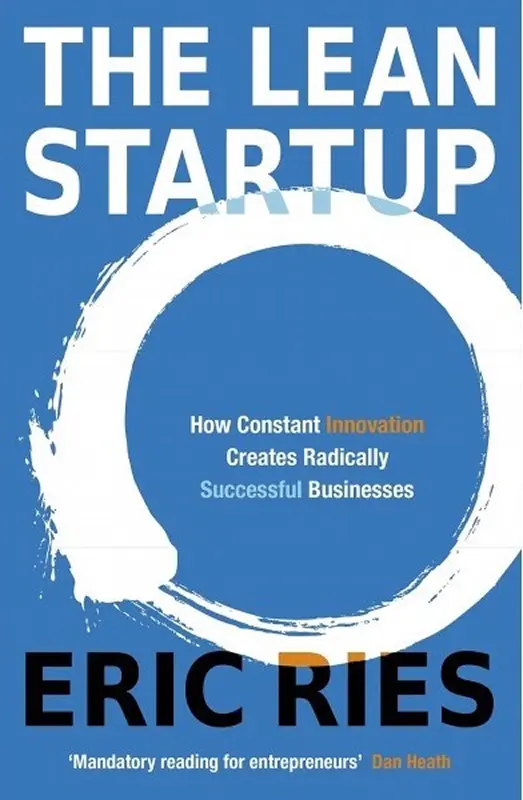
The Lean Startup by Eric Ries
When to read it: Before you write your first line of code or spend your first dollar on anything.
Published in 2011, The Lean Startup by Eric Ries has over 366,000 ratings on Goodreads with an average of 4.11 stars, remarkable staying power for a business book. The core idea is deceptively simple: stop building what you think people want and start running experiments to find out what they actually need.
The book introduced the concept of the Minimum Viable Product (MVP) and the Build-Measure-Learn feedback loop. These ideas now feel obvious because they've been absorbed into startup culture. If you haven't read the source, read it. The summary articles miss the nuance.
The one caveat worth flagging: Ries wrote this primarily for software companies. If you're in hardware, biotech, or anything with long regulatory cycles, apply the principles with that filter in mind.
Pro Tip: Read The Lean Startup alongside The Mom Test. Ries tells you how to iterate fast. Fitzpatrick tells you what questions to ask so your iterations aren't built on lies.
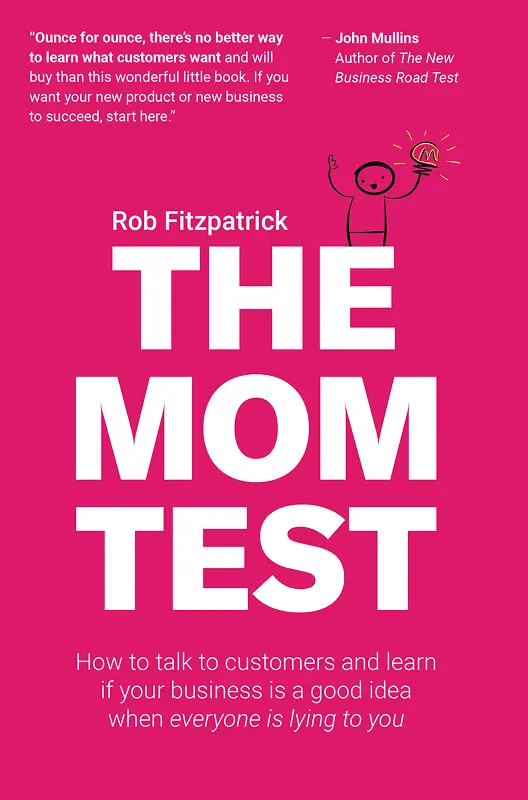
The Mom Test by Rob Fitzpatrick
When to read it: The moment you think you have a validated idea. You probably don't.
The Mom Test is one of the shortest books on this list and one of the most immediately useful. Rob Fitzpatrick's premise: your mom loves you and will tell you your business idea is great. Most customers are polite in the same way. So how do you actually know if your idea is good?
The answer is asking better questions. Fitzpatrick teaches you to stop pitching and start listening, specifically to listen for behavior rather than opinion. "Would you use this?" is a terrible question. "Walk me through the last time you dealt with this problem" is a great one.
Founders who read this before customer discovery conversations consistently report fewer wasted months building things nobody asked for.
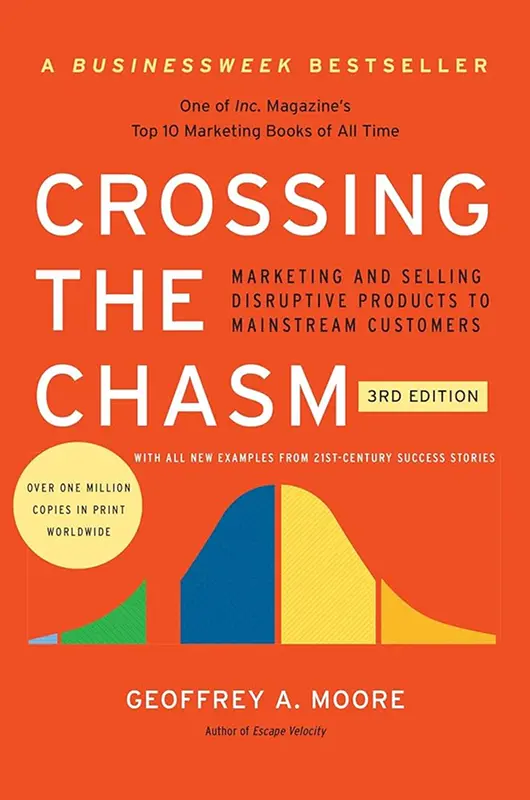
Crossing the Chasm by Geoffrey A. Moore
When to read it: Once you have early adopters but can't seem to grow beyond them.
Originally published in 1991, Crossing the Chasm by Geoffrey A. Moore describes the gap between early adopters (who will try anything new) and the mainstream market (who won't). Most startups plateau exactly there and don't know why.
Moore's framework explains that you can't market to the majority the same way you market to early adopters. You need a beachhead: a specific niche where you can dominate completely before expanding. It's a counterintuitive move: narrow your focus when your instinct says to broaden, but it's backed by decades of case studies across the technology industry.
If your growth has stalled after a promising early run, this book will likely explain what's happening.
Zero to One by Peter Thiel and Blake Masters
When to read it: Anytime, but ideally before you commit to a market.
Zero to One by Peter Thiel, co-founder of PayPal, and Blake Masters distills Thiel's Stanford lecture notes into a compact argument for building something genuinely new rather than competing in an existing space. With over 404,000 ratings on Goodreads and an average of 4.15 stars, it's one of the most widely read startup books in the world for a reason.
The book won't tell you how to run daily standups or structure your cap table. It will challenge the fundamental assumptions behind your company's reason for existing. That's rare and worth your time.
Startup Books for Building and Fundraising
Once you know what you're building and for whom, the real operational weight begins.
Venture Deals by Brad Feld and Jason Mendelson
When to read it: Before you take a single investor meeting.
Venture Deals by Brad Feld and Jason Mendelson, co-founders of Foundry Group, is the definitive guide to understanding how venture capital actually works. Term sheets, liquidation preferences, anti-dilution clauses, pro-rata rights: the book translates every mechanism that VCs use, explains the reasoning behind it, and shows you where the interests of founders and investors diverge.
Historically, the information asymmetry between founders and investors has been significant. VCs negotiate these terms every week. Most founders do it once or twice in their careers. Venture Deals is the closest thing to closing that gap.
Read it once before fundraising. Read it again after you get your first term sheet.
The Hard Thing About Hard Things by Ben Horowitz
When to read it: When you're past early traction and managing people is starting to break you.
The Hard Thing About Hard Things by Ben Horowitz, co-founder of Andreessen Horowitz and former CEO of Opsware, covers the parts of running a startup that no business school curriculum touches. Firing a friend. Laying off half your team. Deciding whether to sell or keep going when everything is on fire.
The tone is blunt in a way most startup books aren't. Horowitz doesn't pretend there are elegant answers to these problems. He shares what he did, what he got wrong, and what he'd do differently. With over 111,000 ratings on Goodreads and an average of 4.20 stars, it resonates because it's honest.
The Startup Owner's Manual by Steve Blank and Bob Dorf
When to read it: Before you build; return to it repeatedly as you scale.
At 608 pages, The Startup Owner's Manual by Steve Blank and Bob Dorf is the longest book on this list and the most comprehensive. Where The Lean Startup gives you a philosophy, this gives you a playbook: step-by-step processes for customer development, product development, sales, and channel strategy.
Think of it less as a cover-to-cover read and more as a reference manual. Founding a B2B SaaS company? There's a chapter for that. Building a consumer marketplace? Same. The depth of coverage makes it uniquely practical at every stage of early company building.
The Cold Start Problem by Andrew Chen
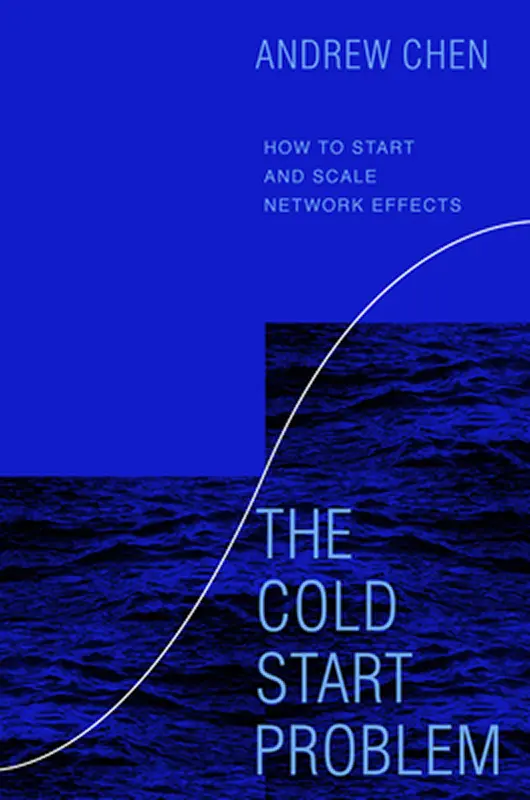
When to read it: If your product depends on network effects or you're building a marketplace.
The Cold Start Problem by Andrew Chen, General Partner at Andreessen Horowitz and former growth lead at Uber, is the best book written specifically about building products where value increases with usage. Two-sided marketplaces, social networks, collaboration tools: they all share the same foundational challenge. How do you get the first 1,000 users when the product is useless without them?
Chen's framework, built from case studies including Uber, Airbnb, Zoom, and Tinder, gives you a structured approach to bootstrapping network effects in a specific, testable way. This book rarely appears on competitor roundups, which is an oversight. If your go-to-market strategy depends on achieving critical mass, it belongs at the top of your reading list.
Startup Books for Positioning and Growth
Having a good product isn't enough. If you can't communicate what it does and who it's for, you don't have a business.
Obviously Awesome by April Dunford
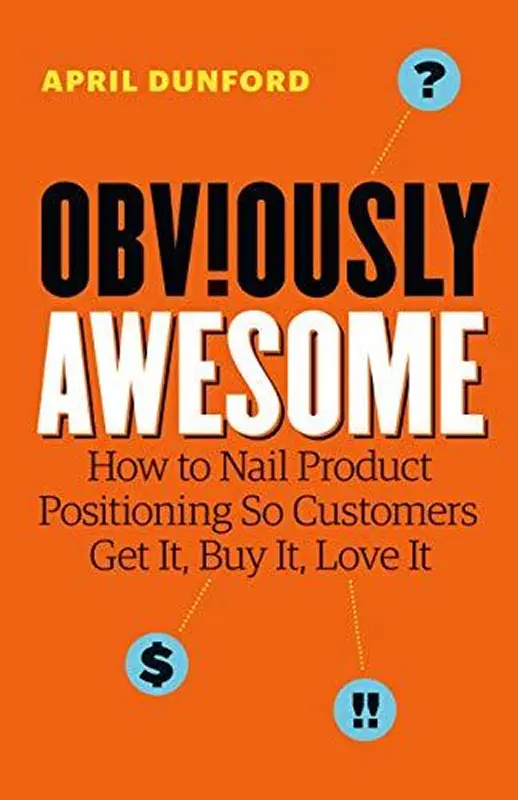
When to read it: When customers don't understand what your product is or why they should care.
Obviously Awesome by April Dunford is the only book dedicated entirely to positioning: the practice of defining what your product is, who it's for, and why it beats every alternative for that specific customer. Dunford has repositioned over 200 products across her career, and the frameworks in this book are the distilled result of that experience.
Most founders confuse positioning with messaging. Messaging is what you say. Positioning is what's true. Get the positioning wrong and no amount of clever copy will save you. This book teaches you how to get it right.
$100M Offers by Alex Hormozi
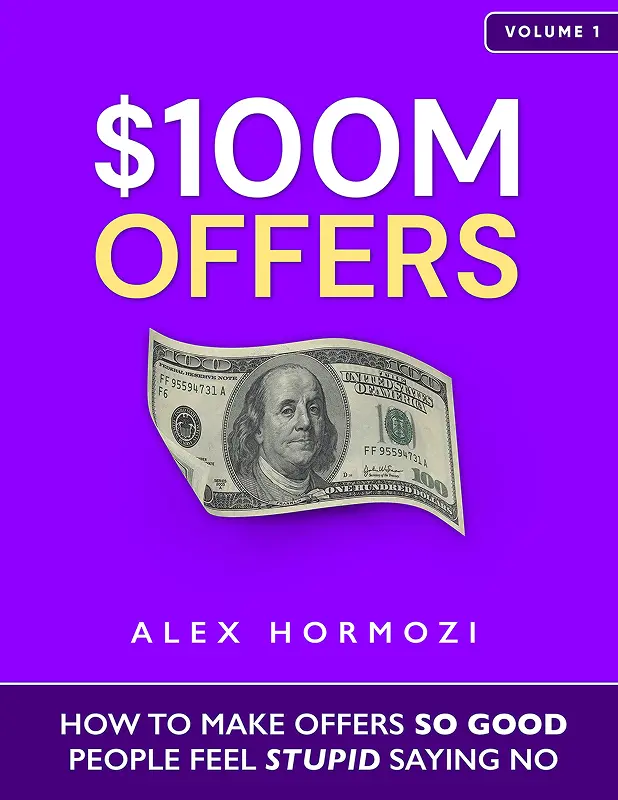
When to read it: When your offer isn't converting and you don't know why.
100M Offers by Alex Hormozi is the least "traditional business book" on this list, and that's precisely why it belongs here. Hormozi built Gym Launch from zero to over $100 million in revenue and published what amounts to a manual for constructing irresistible offers.
The book won't teach you startup strategy. It will teach you how to package what you're selling so that price becomes a secondary concern. For founders struggling with conversion at any stage: landing page, sales call, investor pitch. The principles translate directly. Almost no editorial startup book lists mention it. That's a gap worth filling.
Traction by Gabriel Weinberg and Justin Mares
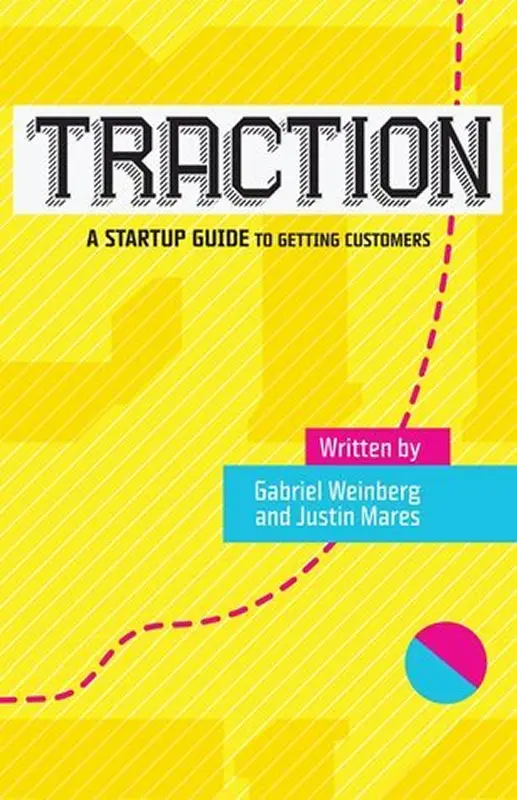
When to read it: When you have a product but no repeatable growth channel.
Traction by Gabriel Weinberg (founder of DuckDuckGo) and Justin Mares maps out 19 distinct customer acquisition channels: SEO, content marketing, paid ads, viral marketing, community building, sales, PR, and more. For each channel, the book explains how it works, when it's most effective, and how to test it cheaply before committing resources.
The Bullseye Framework at the center of the book gives you a process for identifying which of those 19 channels is most likely to work for your specific business right now. It's systematic in a way that most growth advice isn't.
Startup Books for Founder Mental Health and Mindset
This category gets skipped because founders don't want to admit they need it. They do. All of them.
Lost and Founder by Rand Fishkin
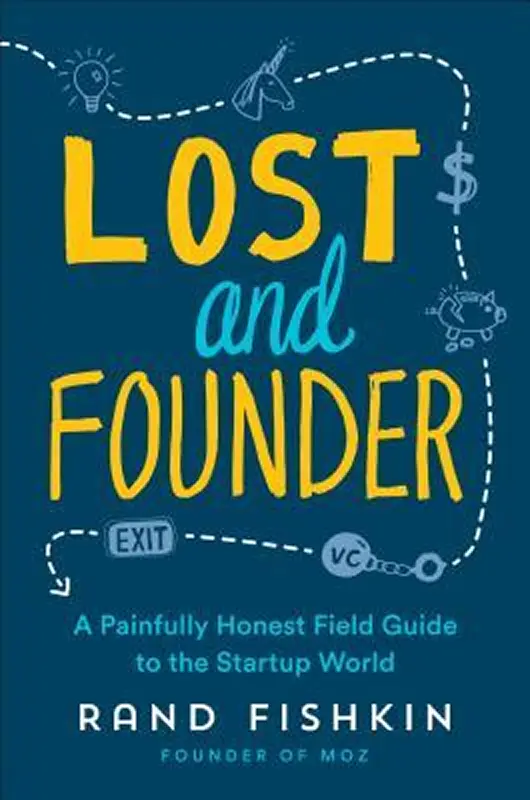
When to read it: Before you raise venture capital, and especially if you're deep in it and struggling.
Lost and Founder by Rand Fishkin, founder of Moz and SparkToro, is the most honest book about the startup experience written by someone who's actually lived it. He covers the full arc: building a company from scratch with his mother, raising venture capital, watching the metrics people celebrate mask deeper dysfunction, losing his CEO role, and rebuilding.
The book is not anti-VC. It's pro-clear-eyed. Fishkin doesn't tell you not to raise money. He tells you to understand exactly what you're agreeing to before you do. That distinction matters.
Reboot by Jerry Colonna
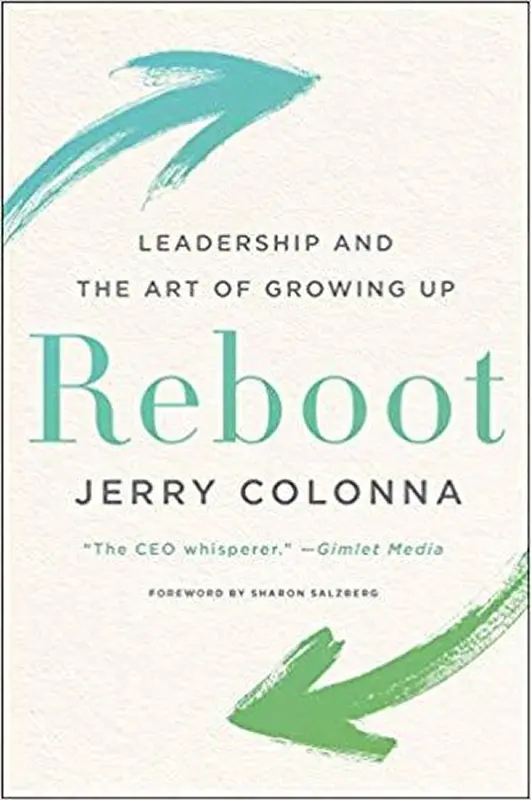
When to read it: When you feel like the company's problems are your personal failures.
Reboot by Jerry Colonna, a former VC who became an executive coach to startup founders, is unlike anything else on this list. It's part leadership book, part memoir, part therapy. Colonna argues that the dysfunction patterns that undermine companies almost always trace back to unexamined patterns in the leaders running them.
This is not a comfortable read. It asks you to look at your childhood, your default behaviors under pressure, and the stories you tell yourself about why things are the way they are. Founders who engage with it seriously report that it changes how they lead in ways that conventional management books never do.
Quit by Annie Duke
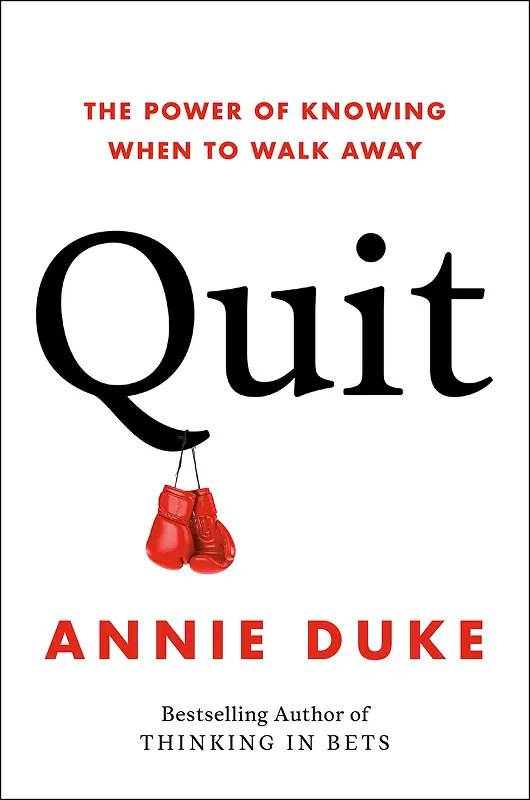
When to read it: When you're not sure if you're persisting because it's right or because of sunk cost.
Quit by Annie Duke, a former professional poker player and decision strategist, makes a rigorous case for quitting as a skill rather than a character flaw. The startup world fetishizes persistence. Duke's research shows that the bias toward "never quit" causes as many failures as quitting too early, just less visibly.
The book gives you frameworks for identifying when you're holding on because the path is genuinely right versus when you're holding on because admitting defeat feels worse than continuing to fail. That is one of the most important questions any founder will face, and almost no one teaches it directly.
Which Startup Books Are Overrated?
Honesty matters here. A few books appear constantly on startup reading lists and deserve some skepticism.
Celebrity founder biographies (Steve Jobs, Elon Musk, Jeff Bezos). These are inspiring to read and largely useless for replication. The decisions that made those companies great were made by singular people in specific historical moments you cannot recreate. Read one if you want motivation. Don't read them expecting transferable frameworks.
The E-Myth Revisited by Michael Gerber is a foundational text for small business owners but was written for service businesses in the 1980s. The "work on the business, not in it" advice still holds. The rest is dated.
Think and Grow Rich by Napoleon Hill is not a startup book. It's a 1937 self-help book that gets recommended in startup circles because it sounds ambitious. Skip it and read something written by someone who has actually built a company.
A Startup Reading Order by Stage
The right book at the wrong stage is a wasted read. Here's a recommended reading order based on where you are.
Stage | Priority Reads | Secondary Reads |
|---|---|---|
Pre-idea / Early exploration | Zero to One, The Mom Test | The Lean Startup |
Pre-seed / Building MVP | The Lean Startup, The Startup Owner's Manual | The Mom Test, Traction |
Seed / Finding traction | Obviously Awesome, Traction, $100M Offers | Crossing the Chasm, The Cold Start Problem |
Fundraising | Venture Deals, Lost and Founder | The Hard Thing About Hard Things |
Post-raise / Scaling | The Hard Thing About Hard Things, Reboot | Quit, Crossing the Chasm |
Any stage | Lost and Founder, Reboot, Quit | (all stages) |
The books in the "Any stage" row don't have a wrong time to read them. They deal with the parts of the founder experience that are constant regardless of company size.
You've Got the List. Now Actually Read the Books.
Most founders buy three startup books a year and finish one. The others sit on a shelf as expensive good intentions.
A more useful approach: pick one book from the list above that matches your current biggest problem. Read that one. Apply it. Then pick the next.
The founders who compound knowledge fastest aren't the ones with the longest reading lists. They're the ones who read with a specific question in mind and act on what they find.
Frequently Asked Questions
What startup books should I read first?
If you're just starting out, read The Mom Test before anything else. It teaches you how to validate whether your idea has real demand before you build anything. Follow it with The Lean Startup, which gives you the operational framework for building iteratively once you've confirmed the problem is real.
What books do successful startup founders recommend most?
According to Y Combinator reading lists and founder communities including Reddit's r/startups, the most consistently recommended startup books are The Lean Startup, Zero to One, The Mom Test, and The Hard Thing About Hard Things. Lost and Founder appears repeatedly in founder forums as a book that resonated personally, not just professionally.
Is The Lean Startup still worth reading in 2026?
Yes, with context. The core framework of Build-Measure-Learn and validated learning remains directly applicable. Some tactical examples are dated, particularly around digital advertising. Read it for the methodology, not the case studies.
What is the best book for startup fundraising?
Venture Deals by Brad Feld and Jason Mendelson is the standard recommendation for a reason. It demystifies term sheets, cap table mechanics, and the motivations of investors in plain terms. Read it before your first pitch meeting, not after you've received a term sheet.
How many startup books should I read?
Fewer than you think, read more deeply. Most experienced founders point to a core set of five to eight books that genuinely shaped their thinking, not a library of fifty that were skimmed. Prioritize completion and application over accumulation. One book read thoroughly beats ten read passively.