You spent forty hours researching the venture capital firm. You practiced your pitch until your throat was dry. The partner nodded along, asked sharp questions, and seemed genuinely engaged. Then, two days later, the email arrives: "We really love what you are building, but it is just not a fit for us right now."
Getting a rejection from an investor feels like a gut punch. It is intensely personal because your startup is intensely personal. However, you cannot afford to let rejection destroy your momentum.
Fundraising is a numbers game paved with rejection. Even the most legendary startups faced dozens of passes before securing their initial capital. The difference between founders who eventually raise and those who quit lies entirely in how they process failure. If you want to know how to handle not a fit investor feedback, you must realize that a rejection is not just a slammed door. It is highly valuable market data.
This guide will break down the psychology of the "soft no," provide exact templates for responding, and show you how to turn rejection into the fuel you need to close your pre-seed round.

Quick Takeaways
When VCs say "not a fit," they are often preserving optionality for future rounds. Treat the relationship as a long-term asset.
Never argue with an investor over email. Always respond with prompt, professional gratitude.
Use the "Feedback Filtration System" to determine if the rejection is a fundamental flaw in your business or just a subjective opinion.
Create "calendar density" by packing your schedule with pitch meetings. This prevents you from fixating on any single rejection.
If multiple investors give you the same reason for passing, it is time to rewrite your pitch deck. How to rewrite a pitch deck after a rejection walks through the full process.
The Anatomy of the Soft No: How to Handle Not a Fit Investor Feedback
To understand how to handle not a fit investor feedback, you first need to decode what the investor is actually saying.
Venture capitalists are in the business of preserving optionality. They never want to completely burn a bridge with a founder, because your startup might suddenly find product-market fit and become a billion-dollar unicorn in two years. If they pass brutally today, you will not let them invest in your Series A tomorrow.
As a result, they rely on the "soft no." This usually takes a few common forms:
"You are just a bit too early for us." This translates to: "We don't believe your team can execute this without more proof, but if you get traction, call us." If you keep hearing this, read why investors said too early.
"This is outside our core wheelhouse." This translates to: "We don't understand this market well enough to take a risk on a pre-seed valuation."
"We are going to pass, but we will be cheering you on from the sidelines!" This translates to: "We are definitely passing, but we want to remain on friendly terms."
Do not take these flowery rejections personally, and do not waste energy trying to decipher hidden meanings. The bottom line is that they are not writing a check today. Your job is to extract whatever useful information you can and move on immediately.
Step 1: How to Handle Not a Fit Investor Feedback with Professionalism
The moment you receive the rejection email, your emotions will spike. You might feel angry, misunderstood, or defensive. Do not reply while in this state.
However, you must reply promptly. Silence is unprofessional, and arguing is catastrophic. The startup ecosystem is incredibly small, and VCs talk to each other constantly. If you send a bitter, defensive email explaining why they are wrong, they will forward that email to their peers. Your reputation will suffer before you even step into your next meeting.
Instead, your goal is to handle the rejection so gracefully that the investor actively remembers your professionalism.
The Perfect Rejection Response Template
Keep your response brief, positive, and forward-looking.
"Hi [Investor Name], Thank you so much for getting back to me so quickly. I really appreciate you taking the time to review our deck and meet with us. While I am disappointed we won't be partnering on this round, I completely understand your reasoning regarding [insert their specific reason, like market timing or stage]. If you are open to it, I would love to add you to our quarterly update email so you can see our progress over the next year. Thanks again for your time, and I wish you the best with your current fund. Best, [Your Name]"
This simple template shows high emotional intelligence. It validates their time, accepts the decision without friction, and gracefully asks to keep the door open for future rounds via an update list.
Step 2: The Feedback Filtration System
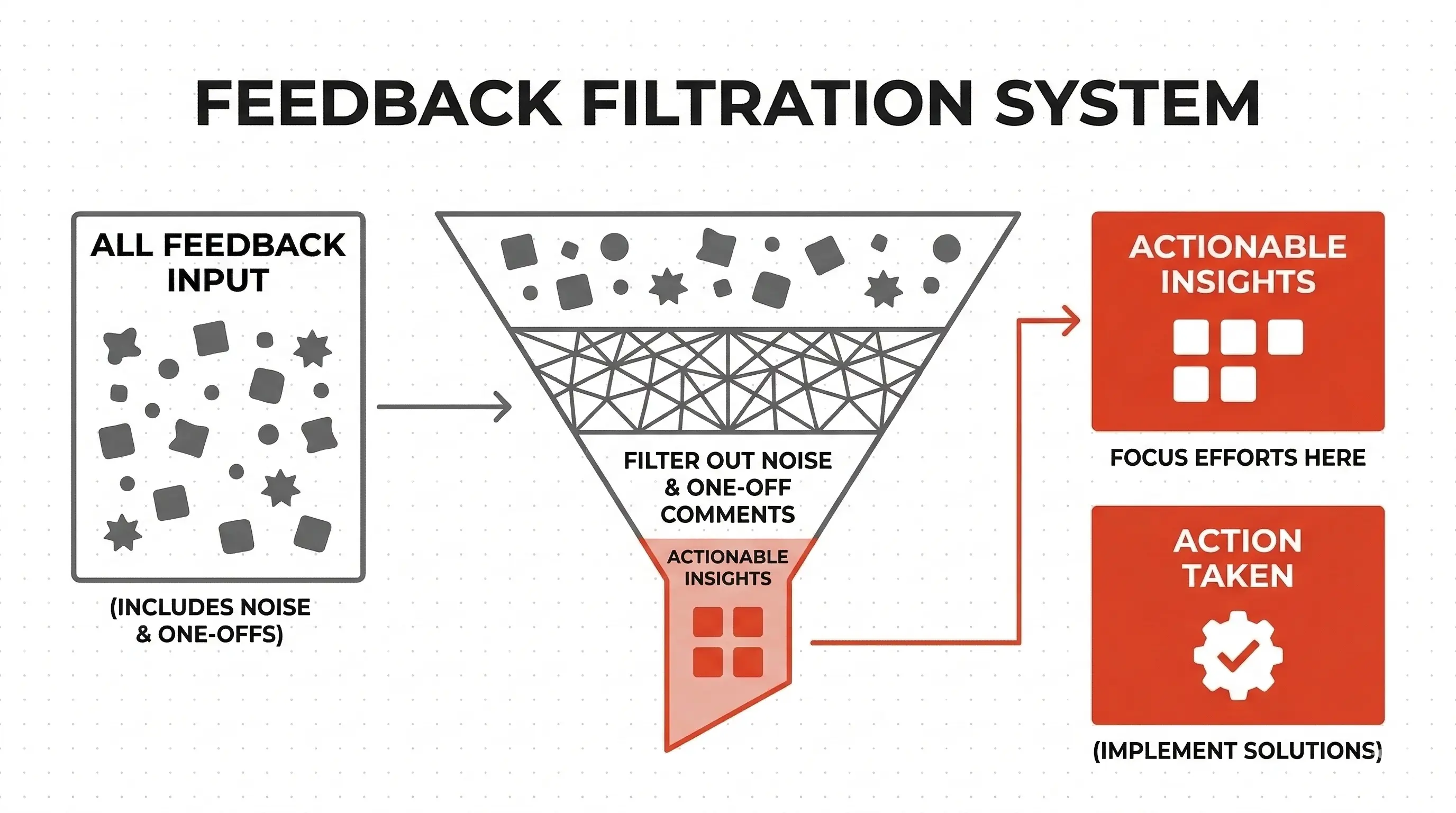
After you have sent the professional reply, you need to conduct a debrief. This is the core mechanic of how to handle not a fit investor feedback effectively.
Not all feedback is created equal. Some investors will give you brilliant, industry-defining advice. Others will give you terrible advice because they simply do not understand your niche. You need a filtration system.
The Single Data Point
If one investor tells you they do not believe in your pricing model, log it in your notes and ignore it for now. One investor's opinion is just a single data point. It might be entirely subjective, based on a bad experience they had with a similar company five years ago. Do not pivot your entire business model based on one rejection.
The Emerging Pattern
If three separate venture capitalists tell you that your customer acquisition cost strategy makes no sense, you have a pattern. A pattern means your premise is flawed or your communication is failing. When the market unanimously rejects your core thesis, you must definitively decide when to pivot your startup idea based on feedback.
When you see a pattern, you must pause your fundraising efforts and address the root cause. This requires intense humility. Instead of assuming three professional investors are all foolish, accept that your narrative is broken. Ask yourself: "Are they rejecting the business, or are they rejecting how I am presenting the business?"
Step 3: Pushing Back Gracefully
Sometimes, the feedback you receive is factually incorrect. Perhaps the investor misunderstood your technical architecture and rejected you based on a false assumption.
Can you push back? Yes, but you must do it with incredible tact.
If they send a rejection based on a clear factual error, you can reply: "Thank you, Sarah. I completely understand the pass. Just to clarify one quick point for my own feedback loop: our architecture actually relies on [correct fact], rather than [the incorrect fact]. Regardless, I really appreciate your time and wish you the best."
Notice that you are not asking them to reconsider the investment. You are simply correcting the record for the sake of clarity. Ironically, taking this low-pressure approach is the only way an investor might actually reconsider. If you beg them to reopen the file, they will ignore you. If you correct the fact softly and walk away, they might realize their mistake and reach back out.
Step 4: Building “Calendar Density” to Survive Rejection
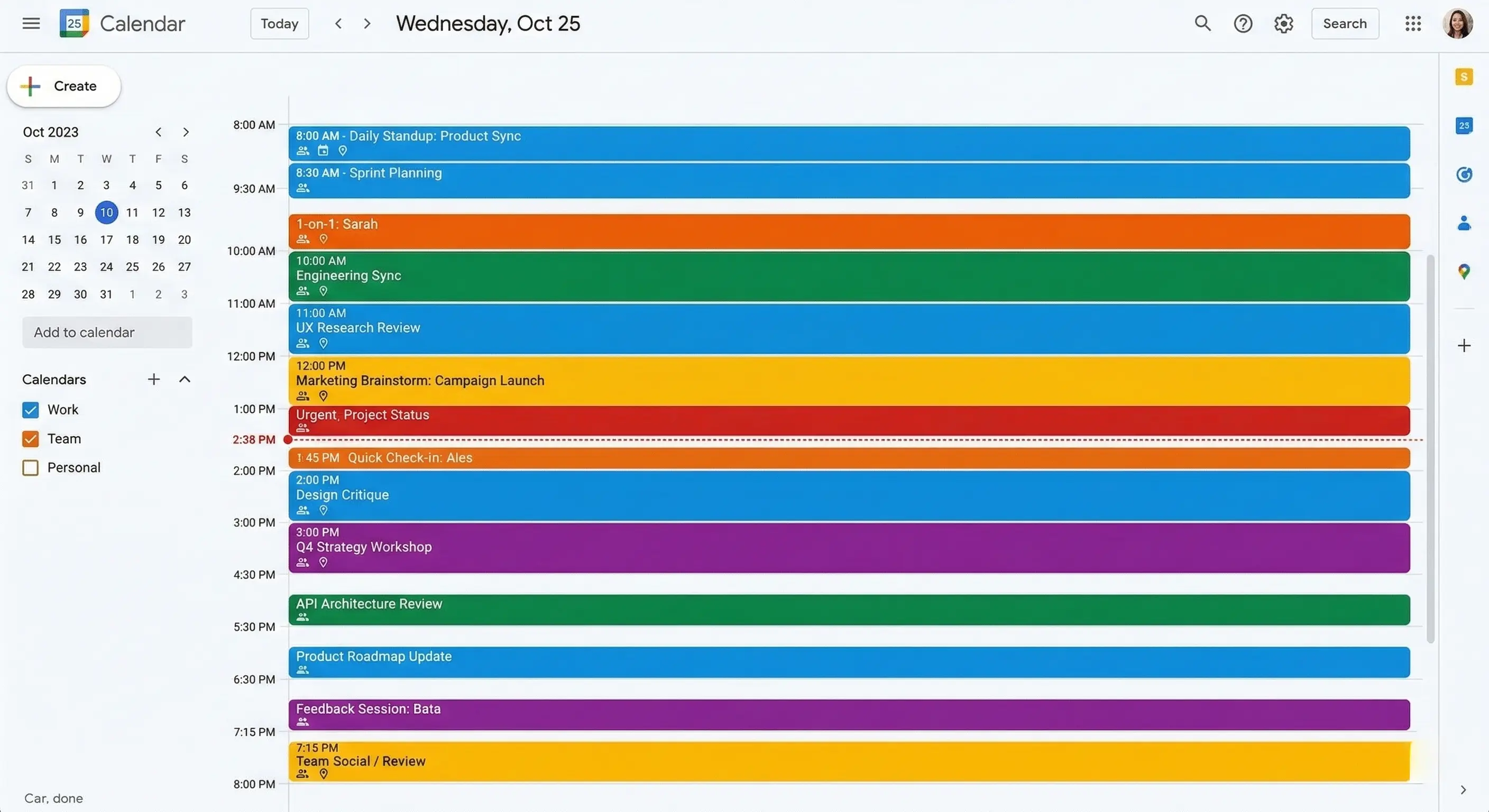
Fundraising is an exhausting psychological battle. If you only schedule one investor meeting per week, and that meeting results in a rejection, your entire week is ruined. You will spend seven days fixating on that single failure.
To master how to handle not a fit investor feedback, you must employ a strategy called "calendar density."
You need to pack your initial pitch meetings tightly together. Try to schedule eight to twelve pitch meetings in a single two-week sprint. When your calendar is packed, you literally do not have the time to dwell on a rejection. If an investor passes on Tuesday morning, you do not have time to be depressed because you have another pitch on Tuesday afternoon.
Calendar density creates natural momentum. It forces you to refine your pitch rapidly, it keeps your energy high, and it prevents the spiral of self-doubt that destroys so many early-stage founders.
How to Turn Negative Feedback into a Better Pitch Deck
The most actionable way to use investor feedback is to let it reshape your pitch deck.
If investors constantly ask the same skeptical question during your meetings, you are failing to address the elephant in the room proactively. Do not wait for them to point out the flaw. Bring the objection forward into the presentation.
For example, if investors constantly say, "Your market seems too small," you must dedicate a newly redesigned slide specifically to market expansion. Show them visually how your niche beachhead market perfectly positions you to capture adjacent billion-dollar industries.
The Execution Gap: Knowing you need to update your deck is easy. Actually designing a new, highly persuasive slide that matches your existing brand identity is incredibly difficult. You are a founder trying to build a company, not a graphic designer tinkering with alignment grids.
This is where Zyner.io becomes essential for fast-moving startups. Zyner offers unlimited design support for a flat monthly fee. When an investor gives you harsh feedback on your market sizing, you can simply send your raw data to your dedicated Zyner team. Within days, you receive a gorgeous, compelling new slide integrated perfectly into your master deck. By partnering with Zyner, you can iterate your pitch materials at lightning speed, ensuring that the feedback from yesterday makes you unstoppable tomorrow.
Protecting Your Confidence
It is impossible to separate the advice on how to handle not a fit investor feedback from the psychological toll of fundraising.
You must establish a strong support system outside of your startup. Whether it is a mastermind group of fellow founders, a supportive partner at home, or an executive coach, you need people who remind you of your worth when the venture capital world tells you "no."
Rejection will erode your confidence if you let it sit in isolation. Remind yourself that the most iconic companies in the world were rejected by dozens of elite investors. Brian Chesky was famously rejected by seven different investors when trying to raise $150,000 for Airbnb. Those investors passed on what would become a multi-billion-dollar return.
Professional investors are highly intelligent, but their crystal balls are just as cloudy as yours.
Treating Rejection as Data: How to Handle Not a Fit Investor Feedback
Fundraising is not a test of your personal value; it is a matching process. You are looking for the rare investor whose thesis, timeline, and risk appetite perfectly align with your vision.
When you get a "not a fit" email, simply log it into your CRM tracking tool. Mark the date, paste the specific reason for the pass, and move to the next row on your spreadsheet. Every rejection is a data point that brings you one step closer to the partner who will fundamentally understand what you are building.
Learn how to handle not a fit investor feedback with grace, use the critiques to sharpen your narrative, and never let one person's opinion slow your velocity.
Frequently Asked Questions
Is a "soft no" from a VC actually a "maybe"?
Almost never. A soft no is a firm rejection for the current funding round. Investors use soft language to be polite and to keep the relationship open for future rounds when your company is more mature. Treat it as a definitive pass and focus your energy on finding a new lead investor immediately.
Should I ask for detailed feedback if the investor just sends a generic rejection?
You can ask, but do not expect a deep analysis. Most investors are reviewing hundreds of pitch decks a week. If they send a generic "not a fit" email, you can reply safely with: "Thanks for the quick response! If you have 60 seconds to share one specific area where we fell short, I would deeply value your insight." If they do not reply, let it go.
What does it mean when an investor says we are "too early"?
"Too early" is the most common rejection in venture capital. It usually means one of three things: they do not believe your team can execute the vision, they do not see enough traction to justify the valuation you are asking for, or they genuinely only invest in companies with a million dollars in annual recurring revenue.
How do I handle not a fit investor feedback when it contradicts another investor?
This happens frequently. Investor A will tell you your pricing is too high, and Investor B will say it is too low. In these cases, you must trust your own vision and customer research. Contradictory feedback usually means neither investor truly understands your specific market dynamics. Log the feedback, but do not pivot your strategy based on conflicting opinions.
Should I keep rejected investors on my company update list?
If they were polite, engaged, and generally respected your vision, absolutely. Send them a brief, highly readable update every quarter highlighting your revenue growth and major milestones. By the time you raise your Series A, they will have watched your consistent execution for a year. Once you master how to handle not a fit investor feedback, keeping them in the loop drastically increases their likelihood of investing in the next round.