
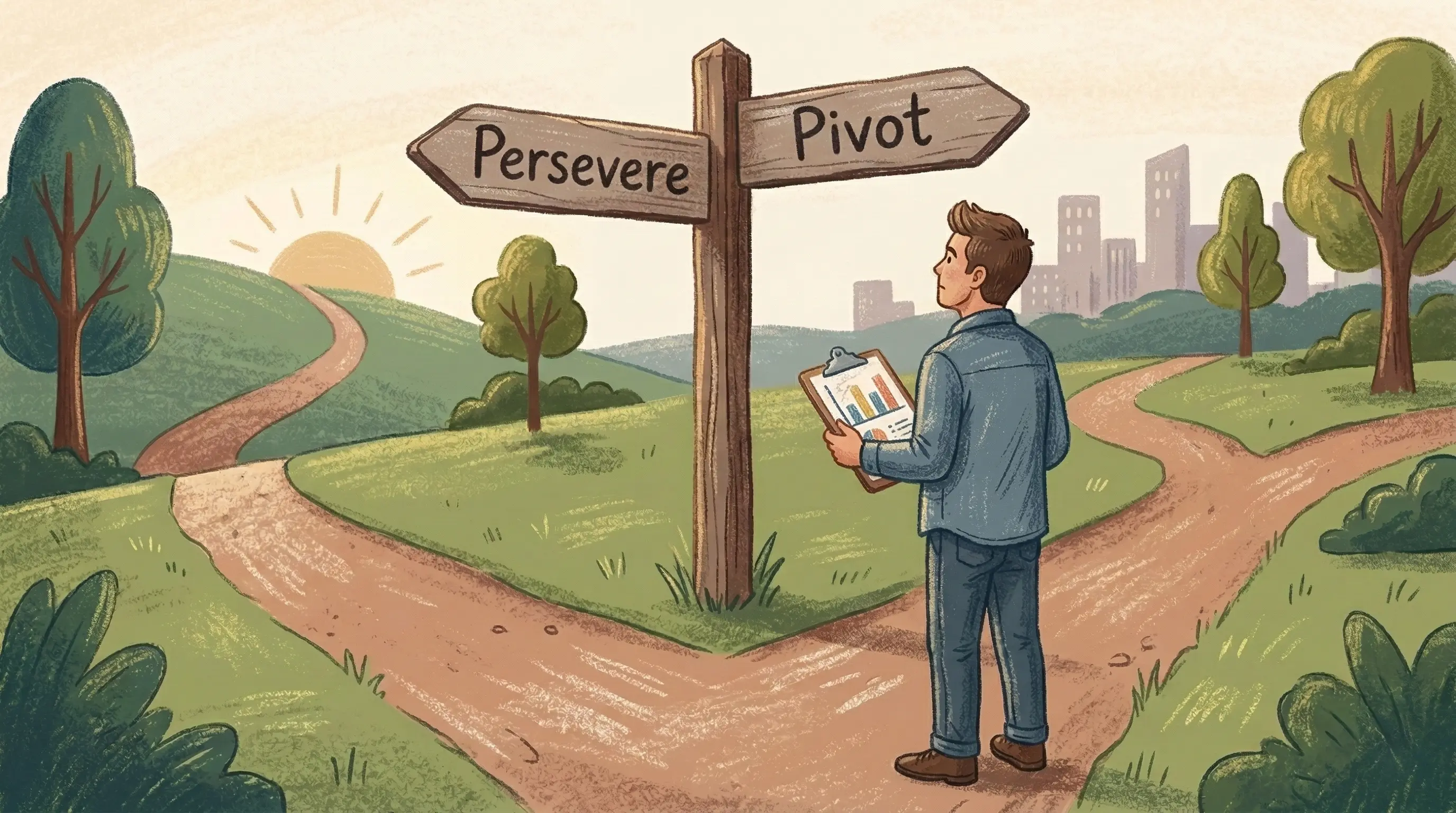
Every founder faces the same agonizing crossroad. You have poured months of your life into building a product. You have pitched it, launched it, and collected user feedback. But the metrics are flat, the growth feels forced, and the initial excitement has faded into a daily grind.
Now you must answer the hardest question in entrepreneurship: Are we giving up too early, or are we being dangerously stubborn? This phrase often signals deeper issues. Read why investors said too early.
Knowing when to pivot your startup idea based on feedback separates the founders who eventually build successful companies from those who burn through their runway building products no one actually wants. A pivot is not an admission of failure. It is a structured course correction based on new evidence.
Quick Takeaways
A pivot is fundamentally changing one key aspect of your business model (customer, problem, solution, or distribution), not just adding a new feature.
The loudest warning sign is customer apathy. If users sign up but never return, or if they claim they love the product but refuse to pay for it, you lack product-market fit.
Do not pivot based on the complaints of a single, vocal user. You must look for persistent patterns in the data across your core target market.
A successful pivot requires validating the new direction with a rapid Minimum Viable Product (MVP) before committing heavy engineering resources.
Transparent communication with your team and investors is critical. If you hide a pivot, you lose their trust; if you explain the data behind it, you gain their respect.
The Difference Between a Pivot and a Panic
Before deciding to drastically alter your company, you must understand what a pivot actually is. In the startup ecosystem, the term is frequently misused to describe minor feature updates or panicked reactions to a bad month of sales.
A true pivot is a purposeful shift in your core strategy designed to test a new fundamental hypothesis about your business model.
For example, switching your sales focus from small businesses to enterprise clients is a customer pivot. Changing your app from a paid subscription to a freemium ad-supported model is a revenue engine pivot. Realizing the internal tool you built to manage your own team's workflows is actually more valuable than the consumer product you originally launched is a product pivot.
A panic, on the other hand, is abandoning your product roadmap because a single flashy competitor entered the market, or because an investor gave you negative feedback during a pitch meeting. Panics are emotional; pivots are analytical.
4 Undeniable Signs It Is Time: When to Pivot Your Startup Idea Based on Feedback
Customer feedback comes in many forms. Sometimes it is explicit (emails telling you the product is too complicated), but more often, it is implicit (users simply abandoning your app after three minutes). Here are four undeniable signs in your feedback loop that indicate it is time to pivot.
1. You Face Total Customer Apathy
The most dangerous feedback isn't anger; it is indifference. If a user hates your product, they care enough to complain. If they do not care at all, they will simply leave and never return.
If you spend thousands of dollars on marketing, acquire thousands of signups, and see a 95% churn rate in the first week, the market is telling you that your solution does not solve a painful enough problem. If your onboarding interviews consistently end with "this is neat, but I probably wouldn't pay for it," you do not have a marketing problem. You have a product-market fit problem. The solution is fundamentally changing the offering, not spending more on Facebook ads.
2. Customers Hack Your Product for a Different Use Case
Sometimes, users will completely ignore your intended value proposition and use your product to solve a completely different problem.
If you build a project management tool for designers, but you notice that 60% of your active users are actually wedding planners using your file-sharing feature to coordinate with vendors, you are receiving an incredible gift. The market is violently pulling your product in a new direction.
Instead of trying to force the wedding planners to use your design tools, you should execute a customer segment pivot. Lean fully into the audience that is already finding organic value in your software.
3. Your Customer Acquisition Cost (CAC) Remains Unsustainable
You have built a great product, and users genuinely love it. The feedback is glowing. There is just one problem: it costs you $500 to acquire a customer whose lifetime value (LTV) is only $150.
If you have spent six months endlessly tweaking your website copy, running different ad campaigns, and testing referral loops, and your CAC still will not drop below your LTV, your current go-to-market strategy is fundamentally broken. You cannot outgrow bad unit economics. This requires a channel pivot or a pricing pivot to survive.
4. The Market Fundamentally Shifted
In fast-moving sectors, your core thesis can be invalidated rapidly by external forces. A massive regulatory change could outlaw your business model. A major platform like Apple or Google could release a free, native version of your exact product.
When structural market changes occur, stubbornness is deadly. Acknowledging that the market has changed and executing a rapid pivot is the only way to save the company.
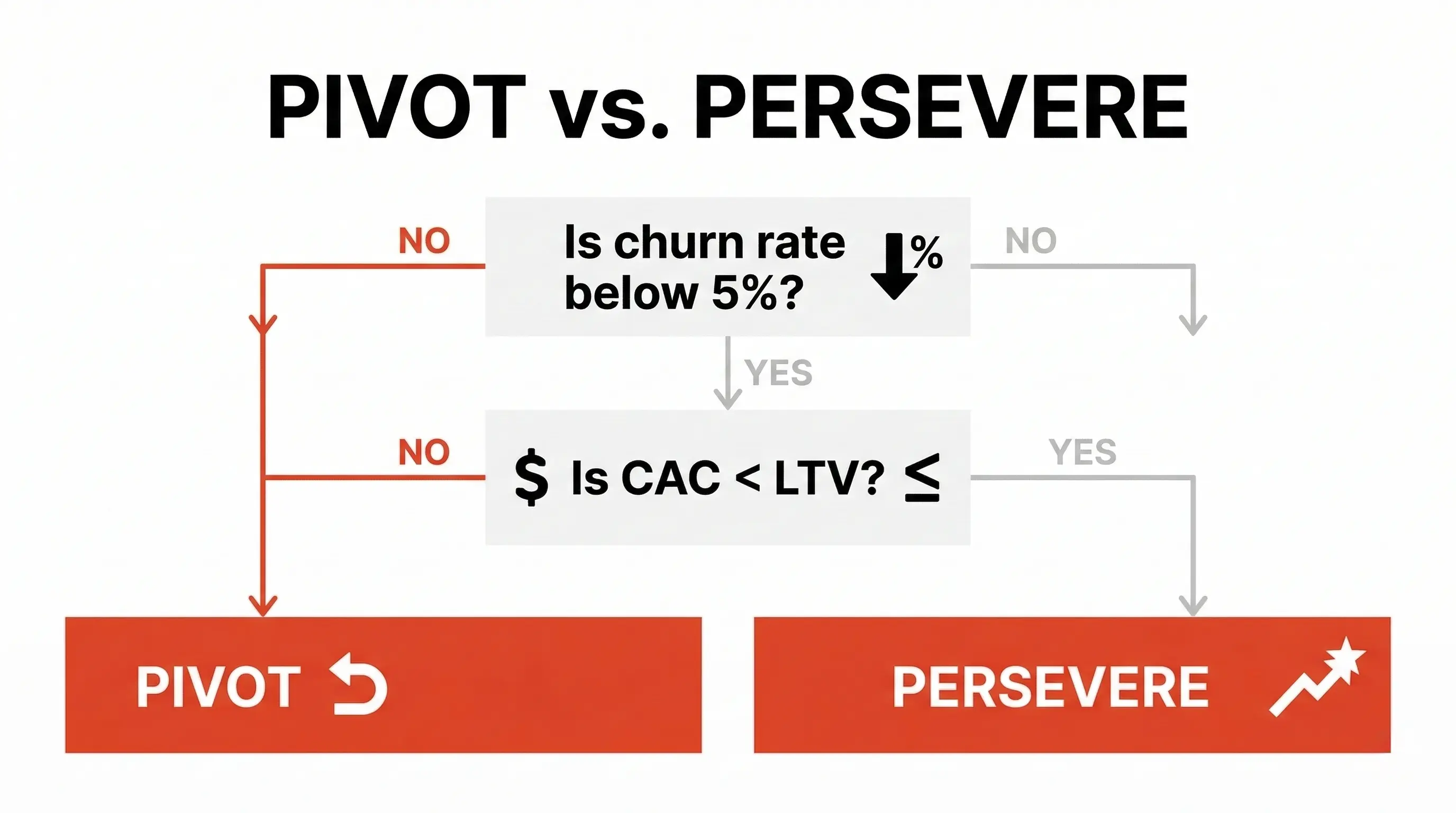
The questions that are suggested here in order to pivot or preserve are examples. There are many factors that you have to consider before pivoting or preserving. This is just a visualisation of the process that you have to take to determine whether to pivot or to preserve.
Differentiating Noise from Pivot-Worthy Feedback
One of the hardest skills for a pre-seed founder to develop is knowing which customer startup investor feedback to ignore. If you pivot every time an influential user complains, your product will become a chaotic mess of half-built features.
To filter the noise:
Segment the feedback: Are the complaints coming from your ideal customer profile (ICP), or are they coming from users who were never a great fit to begin with? Only pivot based on feedback from the audience you actually want to serve.
Look for behavioral data, not just stated preferences: What users say they want and what they actually use are often two different things. If dozens of users demand a specific calendar integration, but the five users who already have it never turn it on, do not pivot your engineering roadmap to focus on calendar features.
Require a critical mass: Set an internal threshold. Do not consider a major strategic shift until you have received the exact same fundamental feedback from at least 20 different qualified users.
Pro Tip: When a customer gives you feature-request feedback, never just build it. Ask them, "If we built that exactly as you described, what specifically would it allow you to achieve that you cannot do today?" You want to discover the underlying problem, which might point to a much larger pivot opportunity.
The Step-by-Step Process for a Successful Pivot
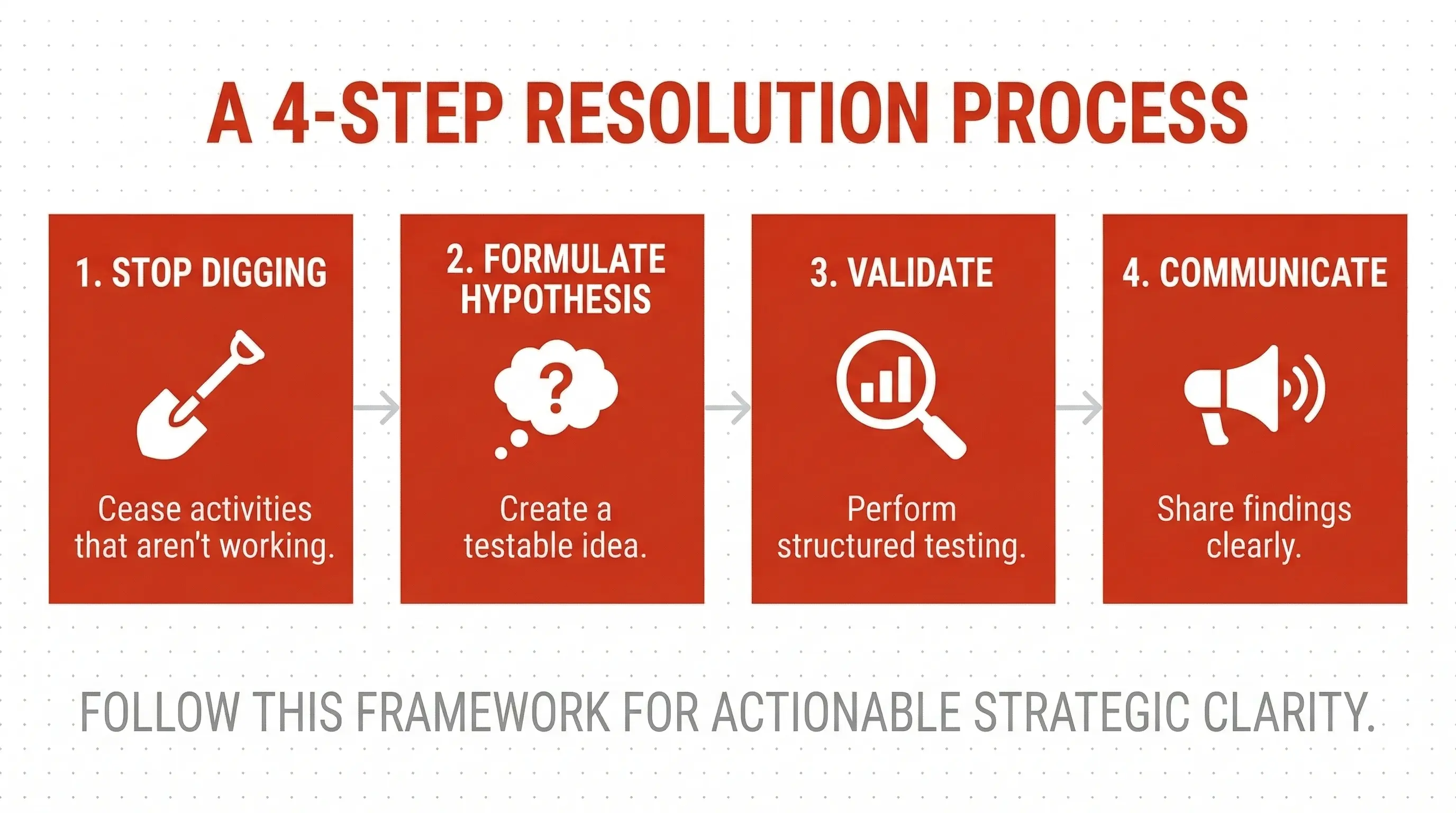
Once you have analyzed the feedback and decided a pivot is necessary, you must execute it methodically so you do not waste your remaining runway.
Step 1: Stop Digging the Hole
Immediately pause all paid acquisition campaigns aimed at the old business model. Stop writing code for features that serve the dying product. Conserve every dollar of cash you have left.
Step 2: Formulate the New Hypothesis
Write down exactly what you are changing. Which of the core assumptions are you updating? Are you targeting a new customer? Solving a different problem? Using a new technology? Be extremely specific.
Step 3: Validate Before You Build
Do not spend three months retreating into stealth mode to build the new version. Create a rapid MVP, a landing page, a clickable prototype, or a manual concierge service, and immediately test it against the same feedback loop that caused you to pivot in the first place. You must validate the new direction in weeks, not months.
Step 4: Communicate Transparently
You must control the narrative. Tell your investors exactly what the data showed, why the old model failed, and why you are deeply convicted about the new direction. Tell your team clearly so they understand why their previous work is being discarded. Honesty buys you the runway to try again.
[TABLE: Types of Startup Pivots]
Pivot Type | Description | Famous Example |
|---|---|---|
Customer Segment Pivot | Keeping the product the same but targeting a completely different audience. | YouTube (started as a video dating site) |
Problem Pivot | Keeping the same target audience but solving a different, more urgent problem they have. | Slack (started as an internal tool for a gaming company) |
Feature Pivot | Taking one single, popular feature from a complex product and making it the entire business. | Instagram (stripped away the clutter of 'Burbn' to focus only on photo sharing) |
Platform Pivot | Changing from an application to a platform, or vice versa. | Shopify (started as an online store selling snowboards) |
Looking the Part: Why Pivots Require Immediate Rebranding
When you execute a successful pivot, your branding, your website, and your pitch deck usually become completely obsolete. You can no longer pitch an enterprise infrastructure tool using the playful, consumer-focused branding of your previous iteration. Executing an immediate, high-quality rebrand is achievable via resources like Zyner's unlimited branding design services. Align your revised narrative with the right pre-seed pitch deck slides.
However, a startup with four months of runway cannot afford to spend $30,000 and eight weeks waiting for a traditional design agency to build a new brand identity. You need a new landing page launched by Friday to start testing your new hypothesis.
This is exactly why high-growth startups use Zyner. By providing unlimited, professional design services for a flat monthly rate, Zyner functions as your in-house design team. When you pivot, you simply drop a request into your dedicated Slack channel. Within days, you receive a completely overhauled pitch deck, fresh UI mockups, and a new Framer landing page that perfectly aligns with your new strategic direction. It removes the friction from pivoting, allowing you to test new ideas with a polished, professional aesthetic that builds immediate trust with your new target market.
The Bottom Line
Understanding when to pivot your startup idea based on feedback is the ultimate test of founder intuition. You must balance relentless determination with cold, hard objectivity. Do not view a pivot as a failure; view it as the reward for successfully running an experiment. The feedback you gathered was expensive, but if you use it to point your company toward true product-market fit, it will be the most valuable data you ever collect.
Frequently Asked Questions
Does a pivot mean my startup failed?
Absolutely not. A massive percentage of today's most successful tech companies, including Slack, Instagram, and Shopify, achieved their massive valuations only after executing a major strategic pivot. A pivot is a sign of a fast-learning, adaptable founding team.
How much runway should I have left before pivoting?
Ideally, you should execute a pivot while you still have at least six to nine months of cash runway. Pivoting when you only have four weeks of cash remaining is incredibly difficult, as you will not have the time necessary to validate the new direction or raise more capital.
Should I return investor money instead of pivoting?
If you have entirely lost passion for the industry, or if every reasonable hypothesis has been thoroughly disproved, returning remaining capital to investors is a respectable choice. However, most pre-seed investors expect you to pivot and try a new angle within the same general market. Always discuss this openly with your lead investor.
How do I tell my team we are pivoting?
Be brutally honest and heavily data-driven. Show them the user feedback, the churn metrics, and the customer acquisition costs that made the pivot necessary. When the team sees that the decision is rooted in undeniable reality rather than founder panic, they will respect the shift and rally behind the new vision.
What is a micro-pivot?
A micro-pivot refers to a smaller, contained adjustment that does not change the core fundamentals of the company. For example, changing your pricing structure from a flat monthly fee to usage-based billing is a micro-pivot. It adjusts the mechanics but does not change the core product or target customer.