



Case study
Illustrating how Caestro’s AI agents work and building a website
Client
Caestro
Industry
Enterprise AI
Timeline
2 weeks
Stage
Pre-seed
“Testimonial coming soon”
 Hassan BhattiFounder @Caestro
About project
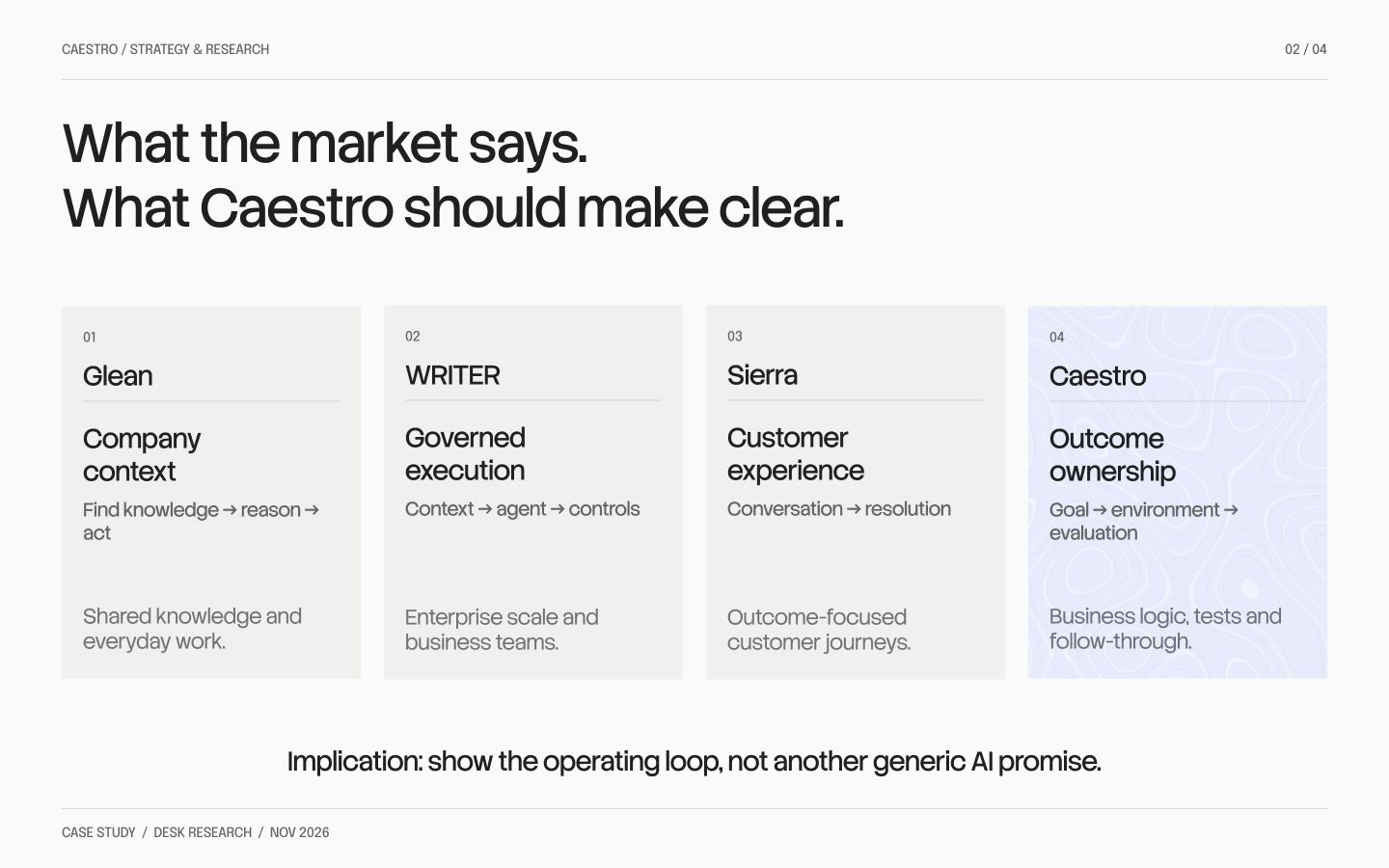
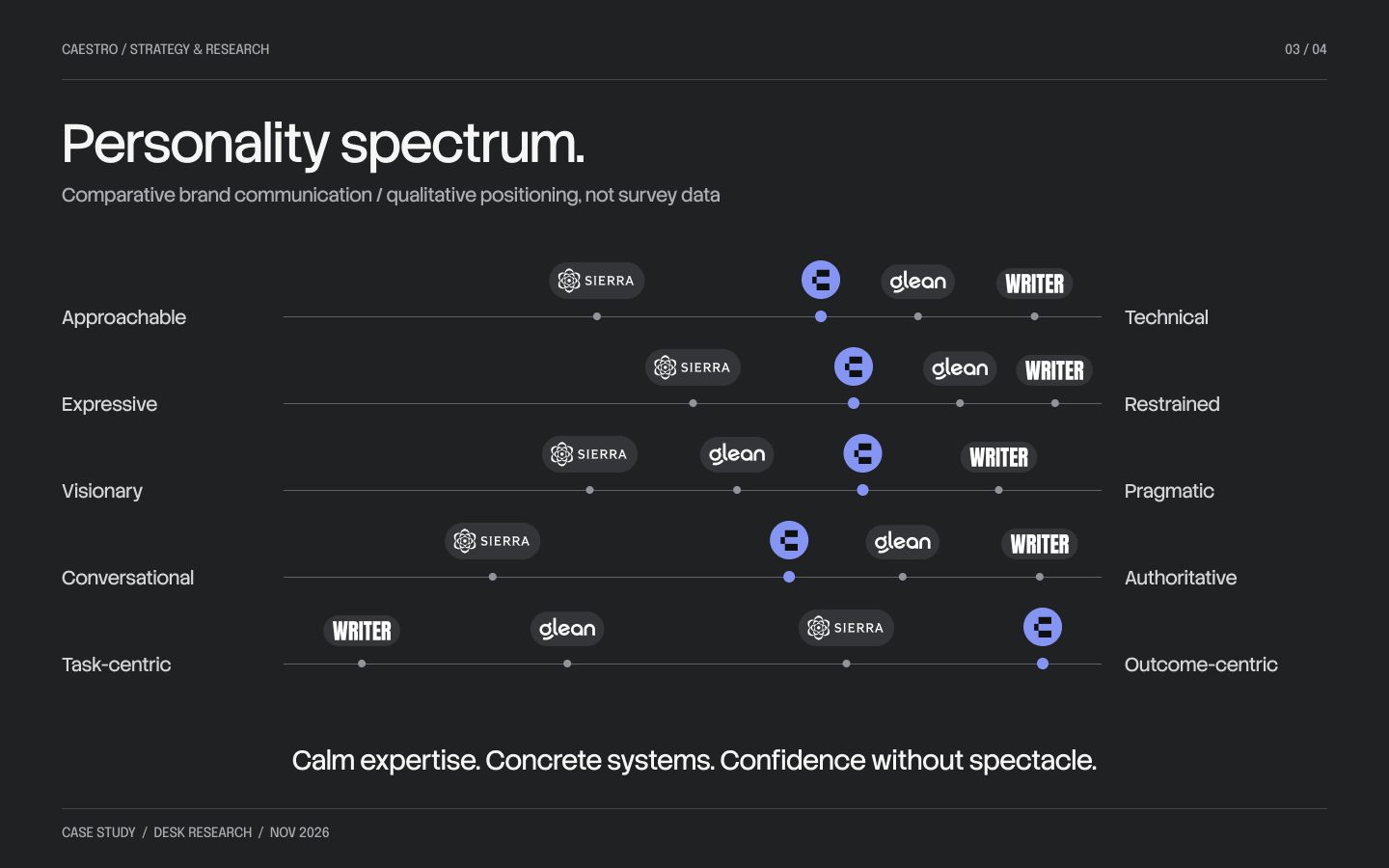
AI agents that work toward a business goal
Caestro builds AI agents that keep working toward a business goal after the first task is done. An agent learns the company's records and rules, carries the work forward and asks a person when it hits something the records can't answer.
We designed and built Caestro's launch site in Framer, drew its product illustrations and set up a blog the team runs itself. We handed over the finished build two weeks after onboarding.
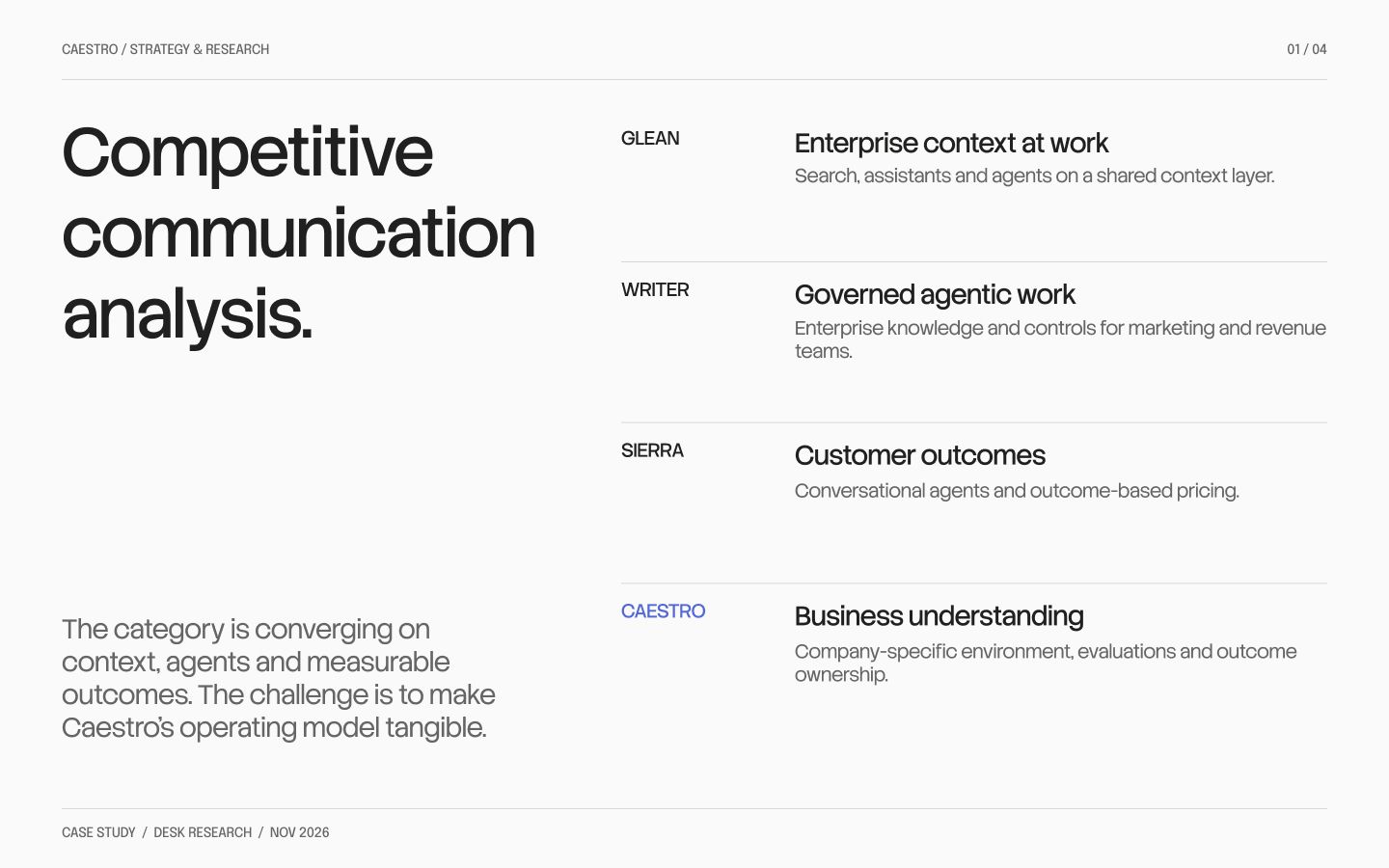
Caestro came to us with a pitch deck, a working draft of the product story and Punch In, a brand concept based on computer punch cards. Hassan Bhatti also planned to send the site to investors after meetings, so the page had to work for them too.
Challenge
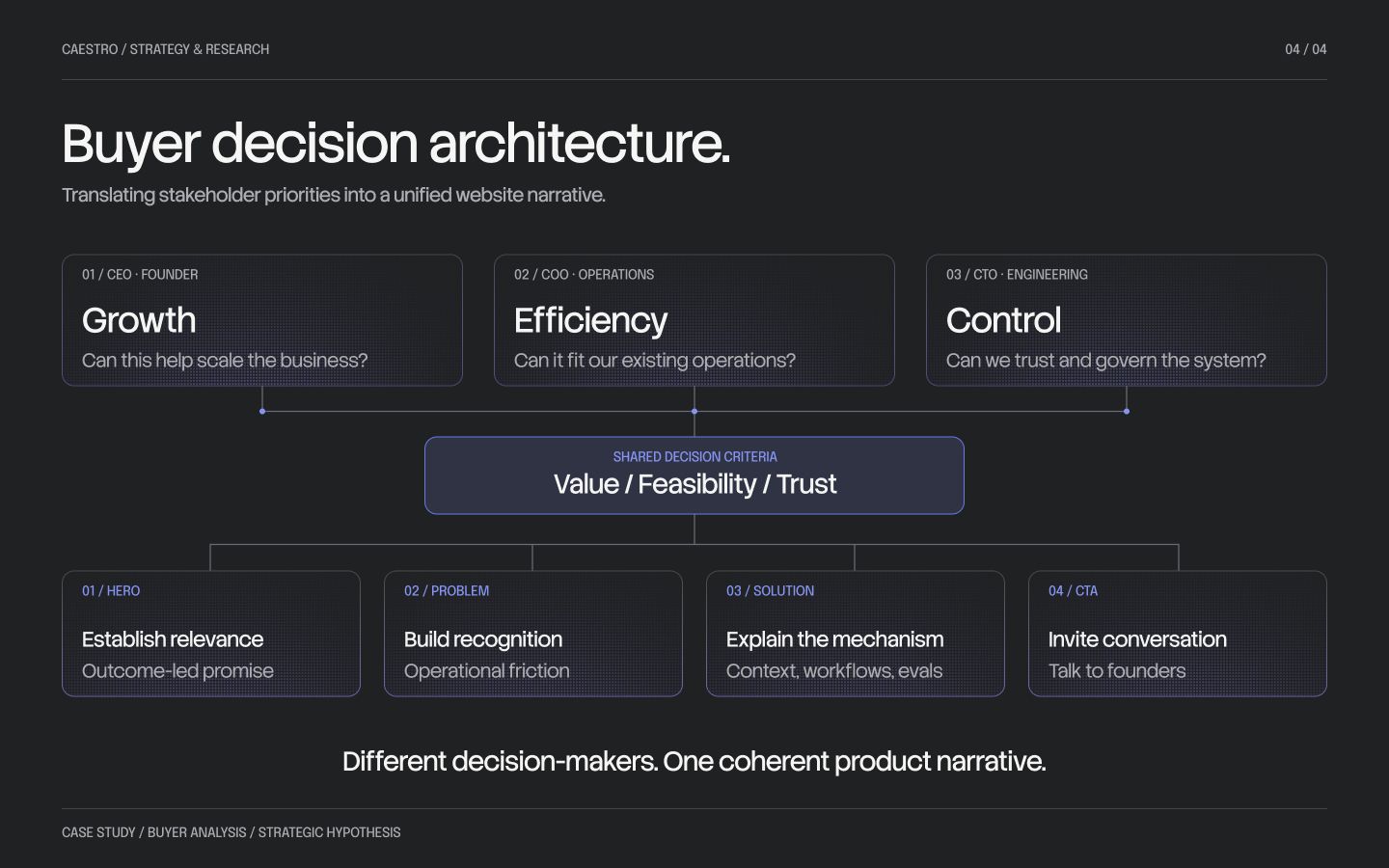
Buyers had to picture a process they can't watch
Caestro sells to business leaders at mid-market companies and private equity firms. They decide whether to trust an agent with real work, and most of them aren't engineers.
What they're buying is a process. An agent learns how a company works from its documents, people and systems, then carries work through to a result. Nobody can watch that happen, and the site still had to make it easy to follow.
The brief asked for direct language, a restrained site and a purposeful use of the punch-card concept. Buyers needed to see where company records, rules and human checks fit. The same page had to answer an investor's questions, and it had to be ready on a short schedule.
Problem section
Problem before product
A buyer won't care how an agent learns until they see their own problem on the page. So the page opens on the problem and holds the explanation of Caestro until the next section.
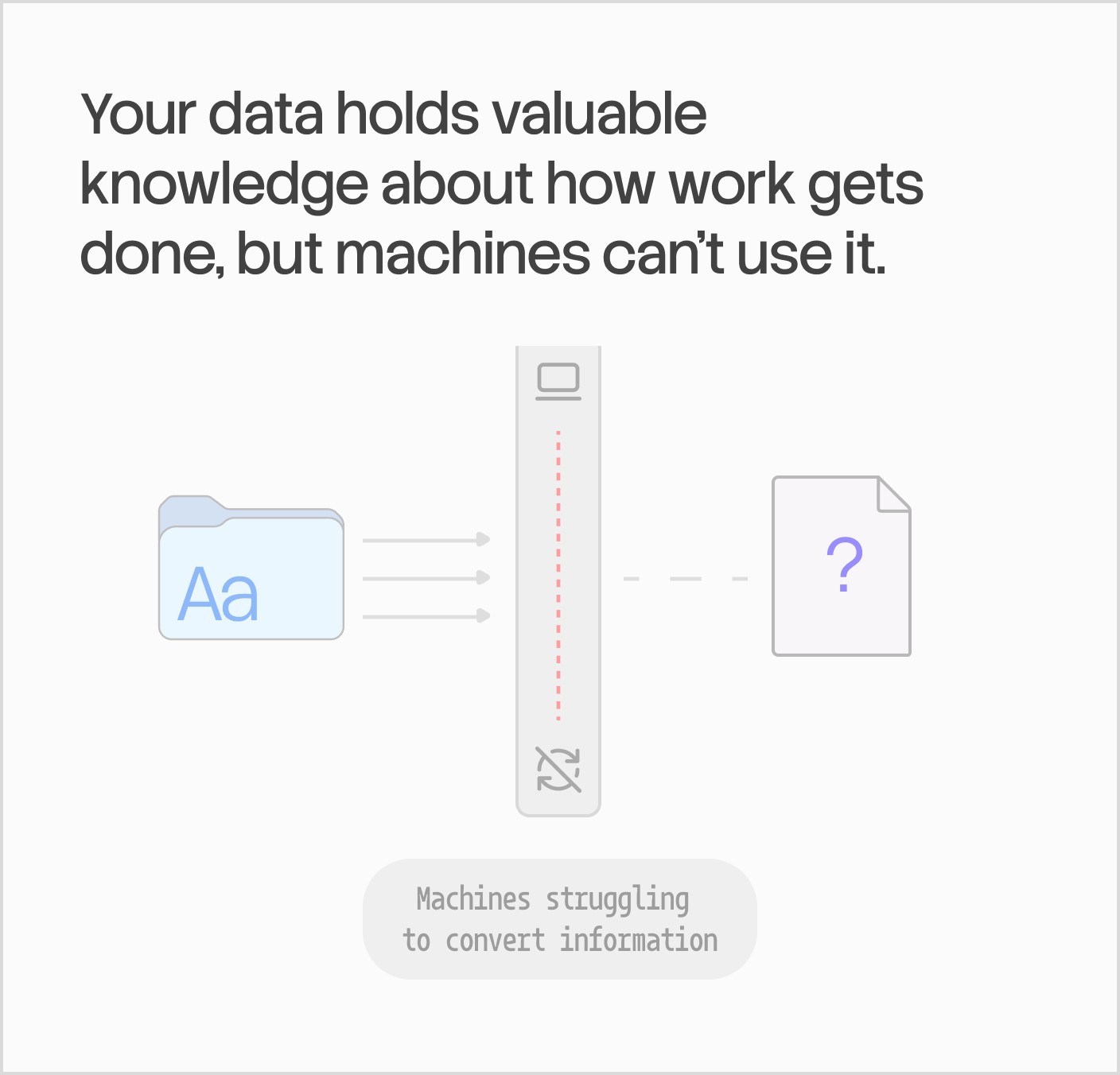
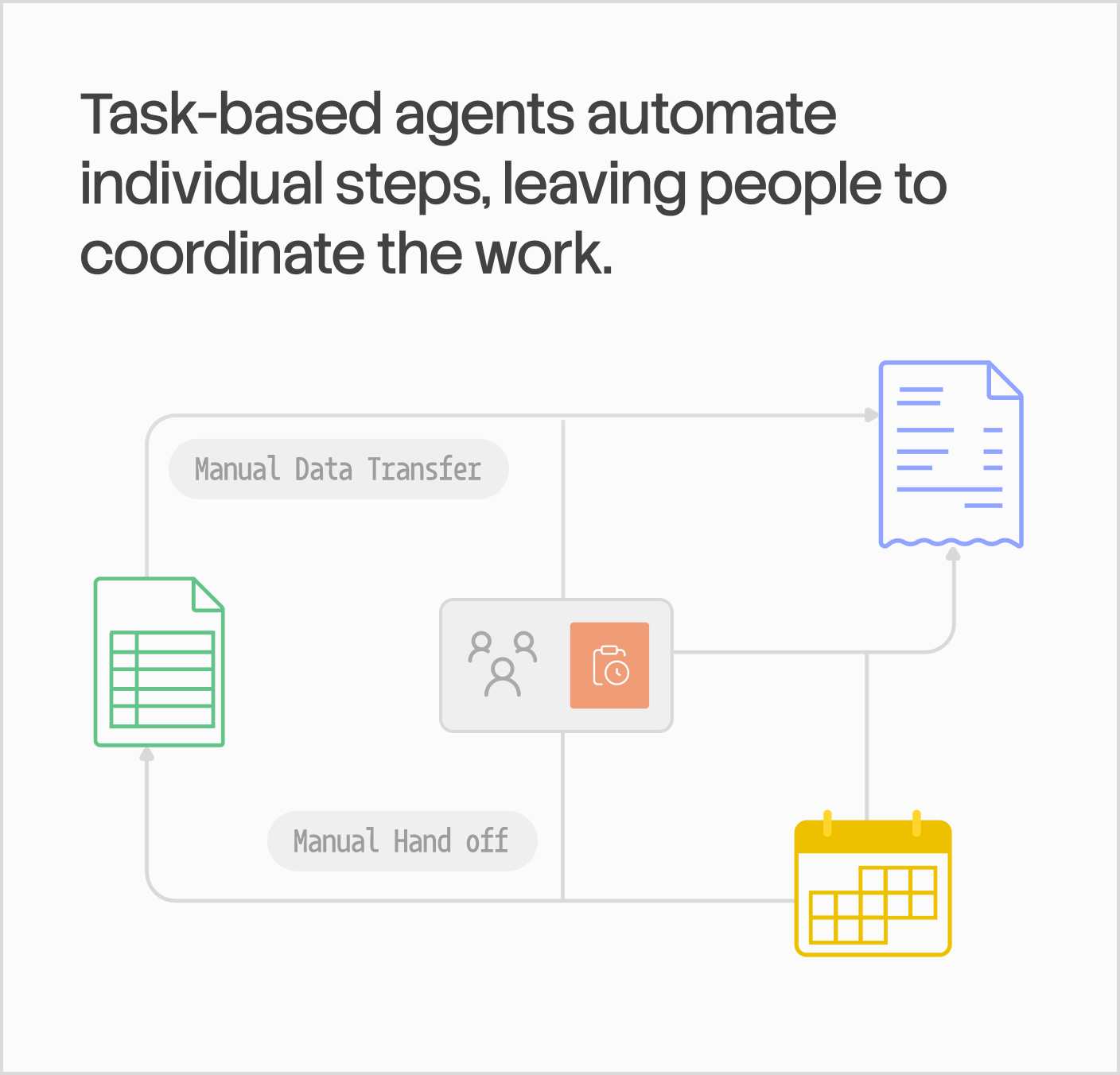
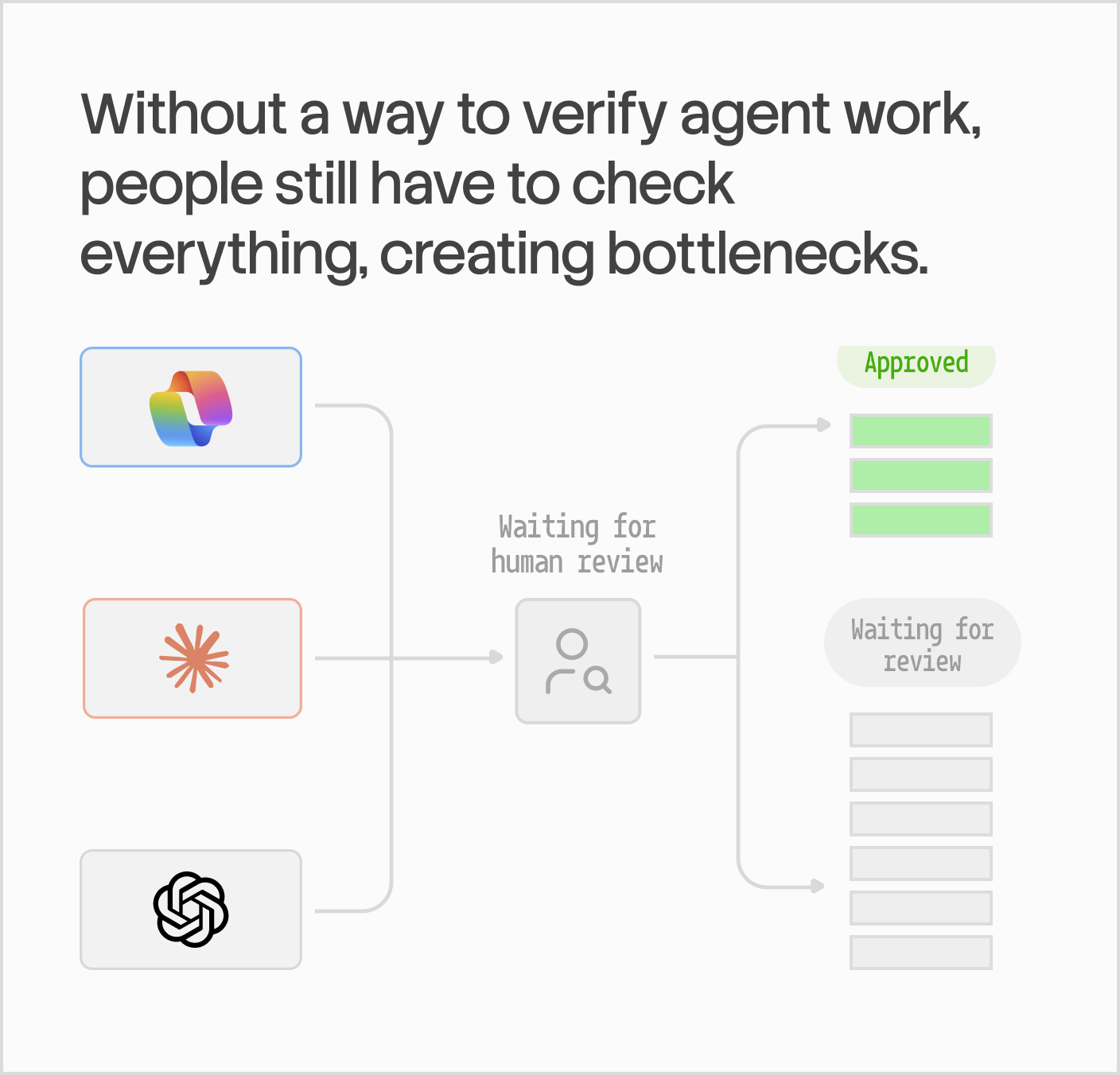
Working with Hassan, we split the problem into the three places work stalls: records a machine can't use, handoffs people carry between tools and results someone has to check.
Each one got its own illustration. In the third, work from three AI tools lines up in front of a single reviewer, so the bottleneck is clear before anyone reads the caption.
Caestro's final copy pass gave the section its opening question. If an agent can summarize a sales call, why can't it close the deal?
Product explanation
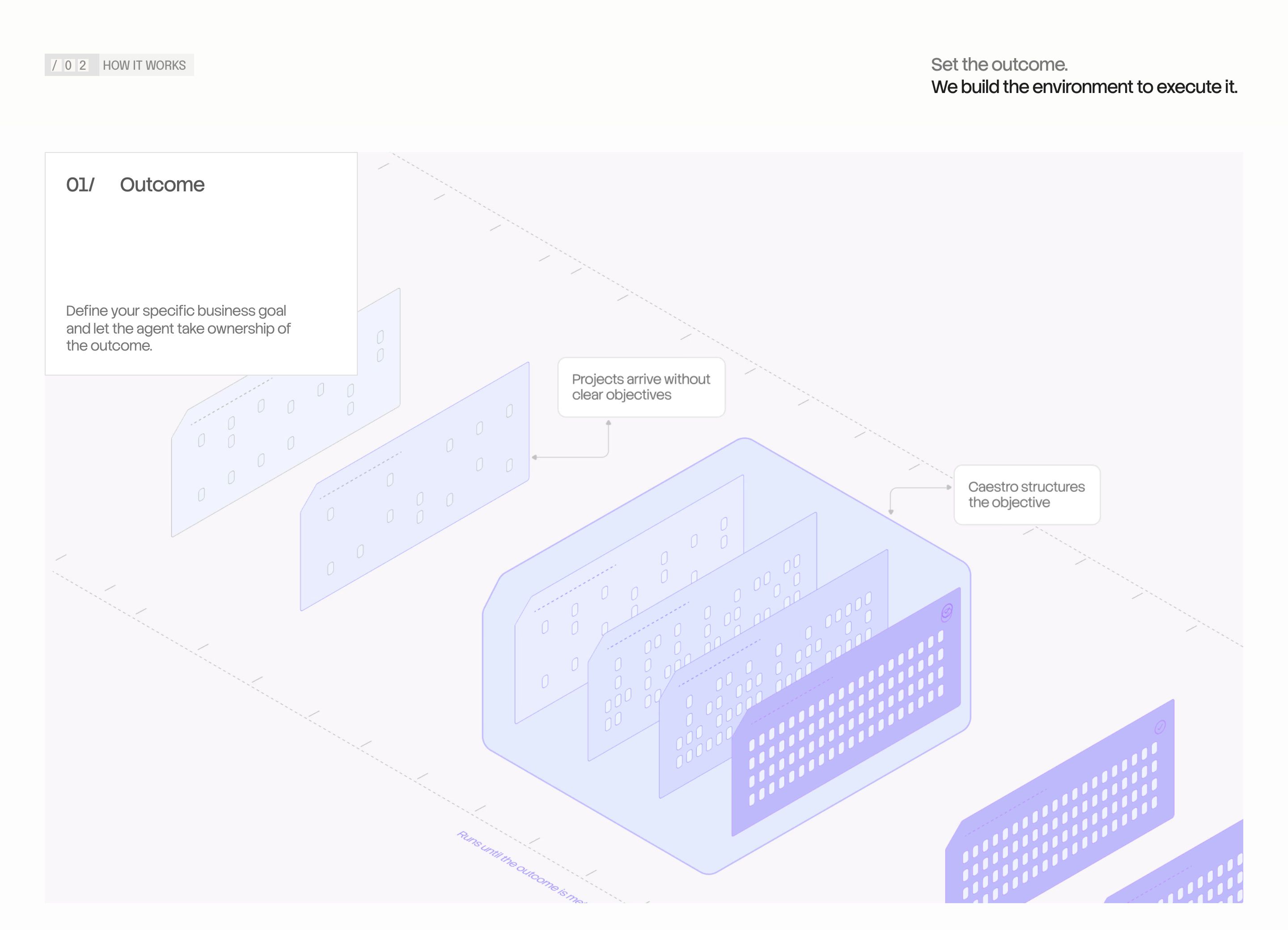
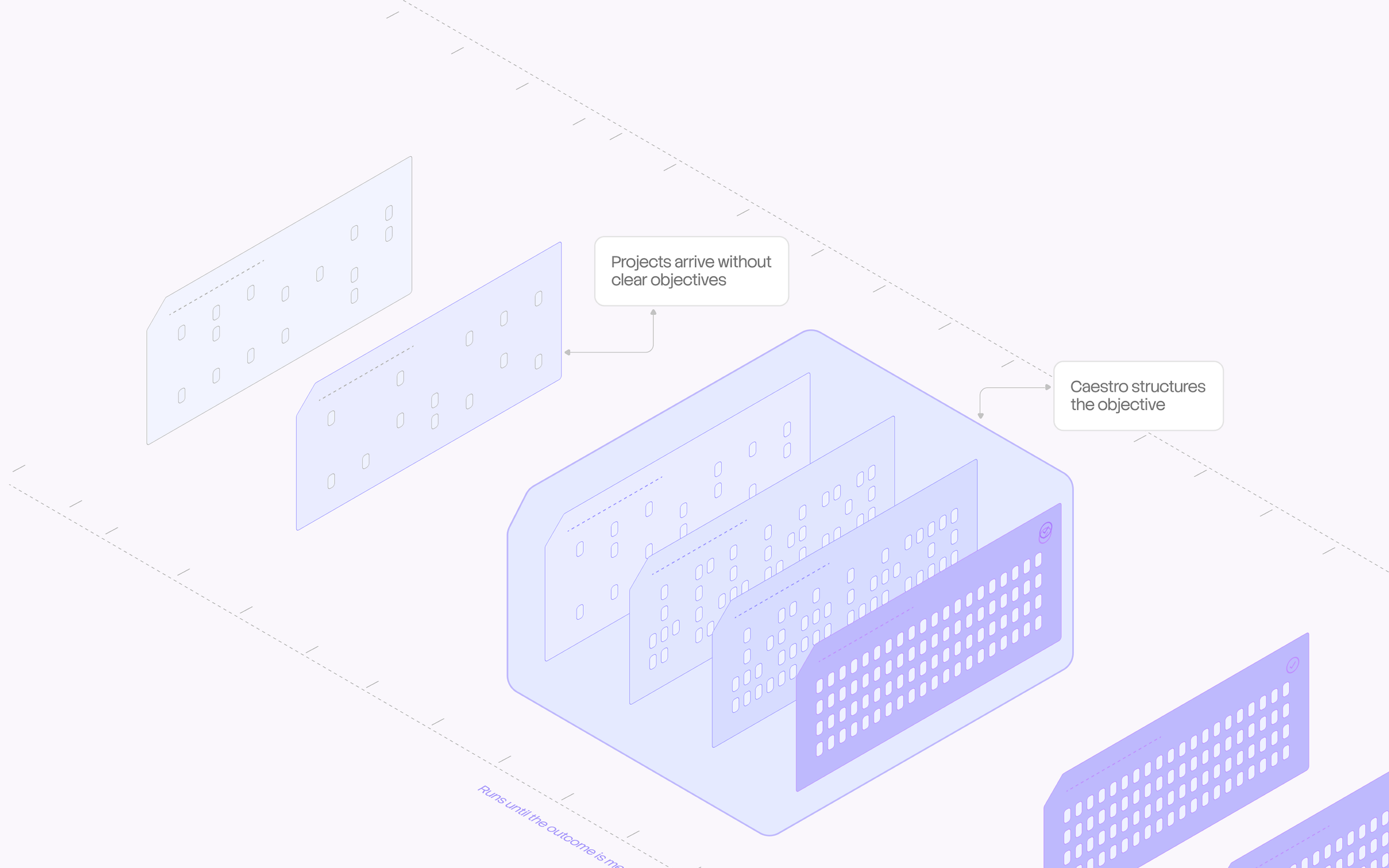
One punch card, five steps
The brief asked for the punch card to earn its place on the page. We drew the process two ways.
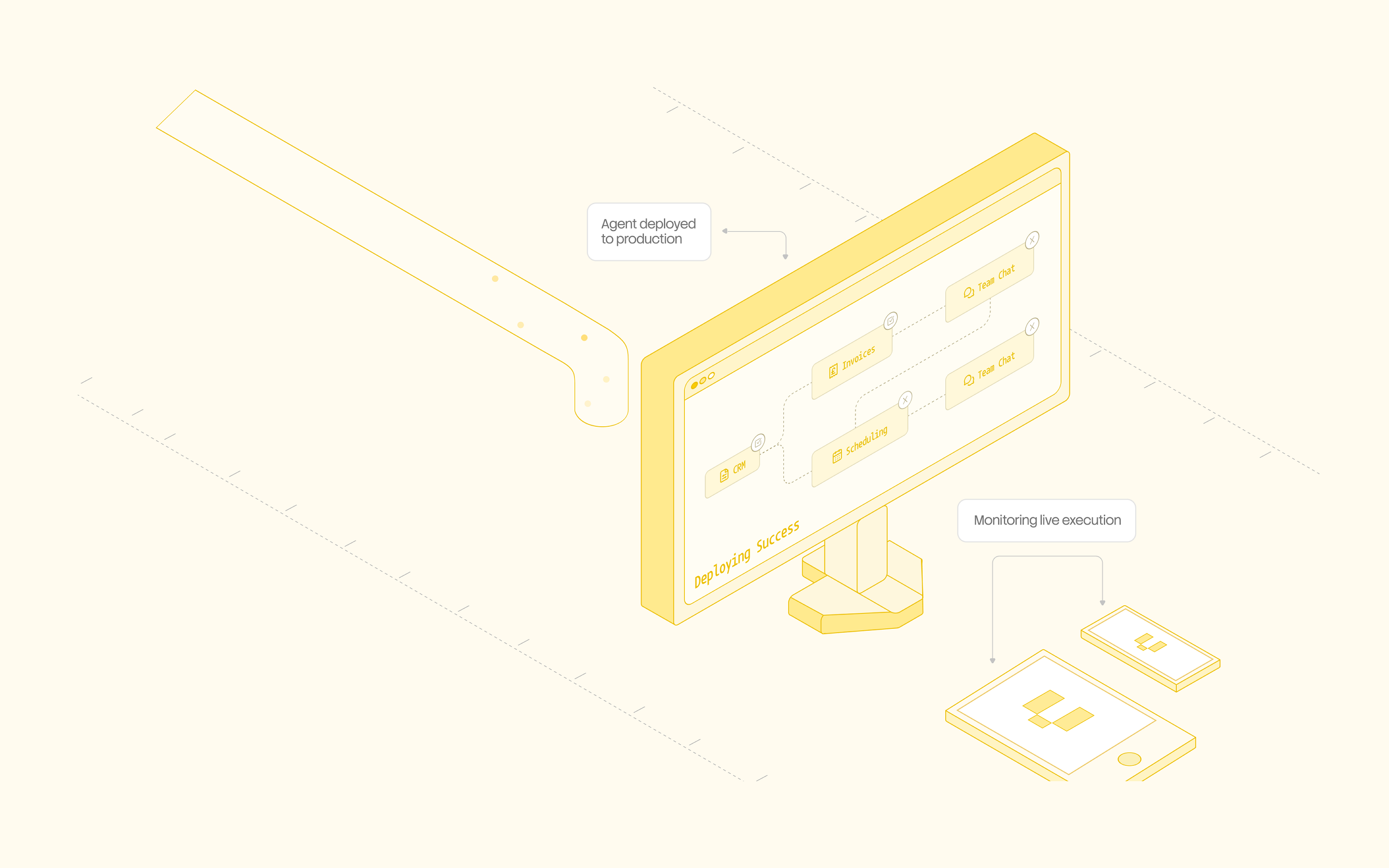
The first used color-coded paths and grids to show a goal turning into a measurable objective and records being queried. The second built a spatial sequence from punch cards, folders and labels, so the card itself shows the goal being set and the company's knowledge being gathered.
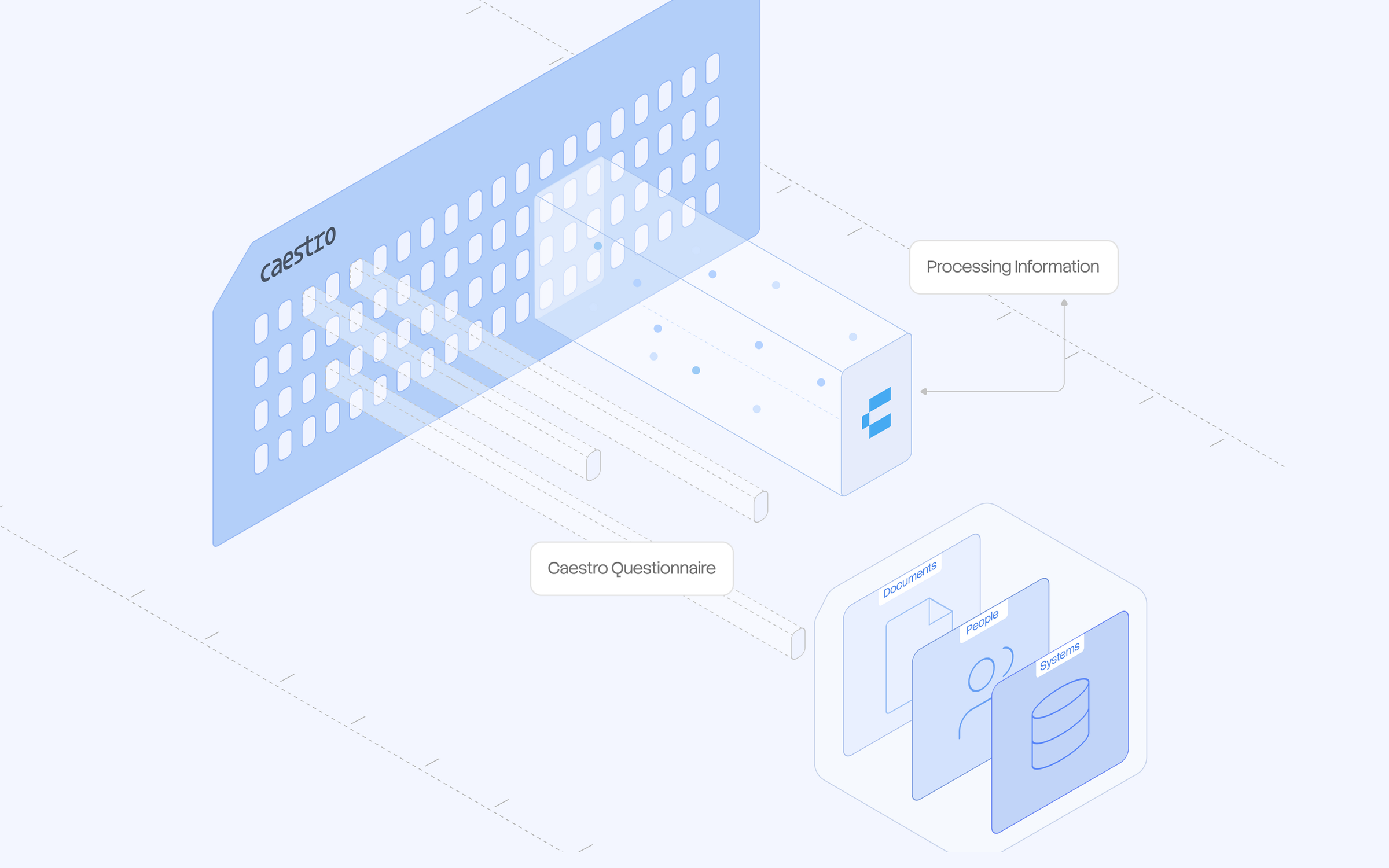
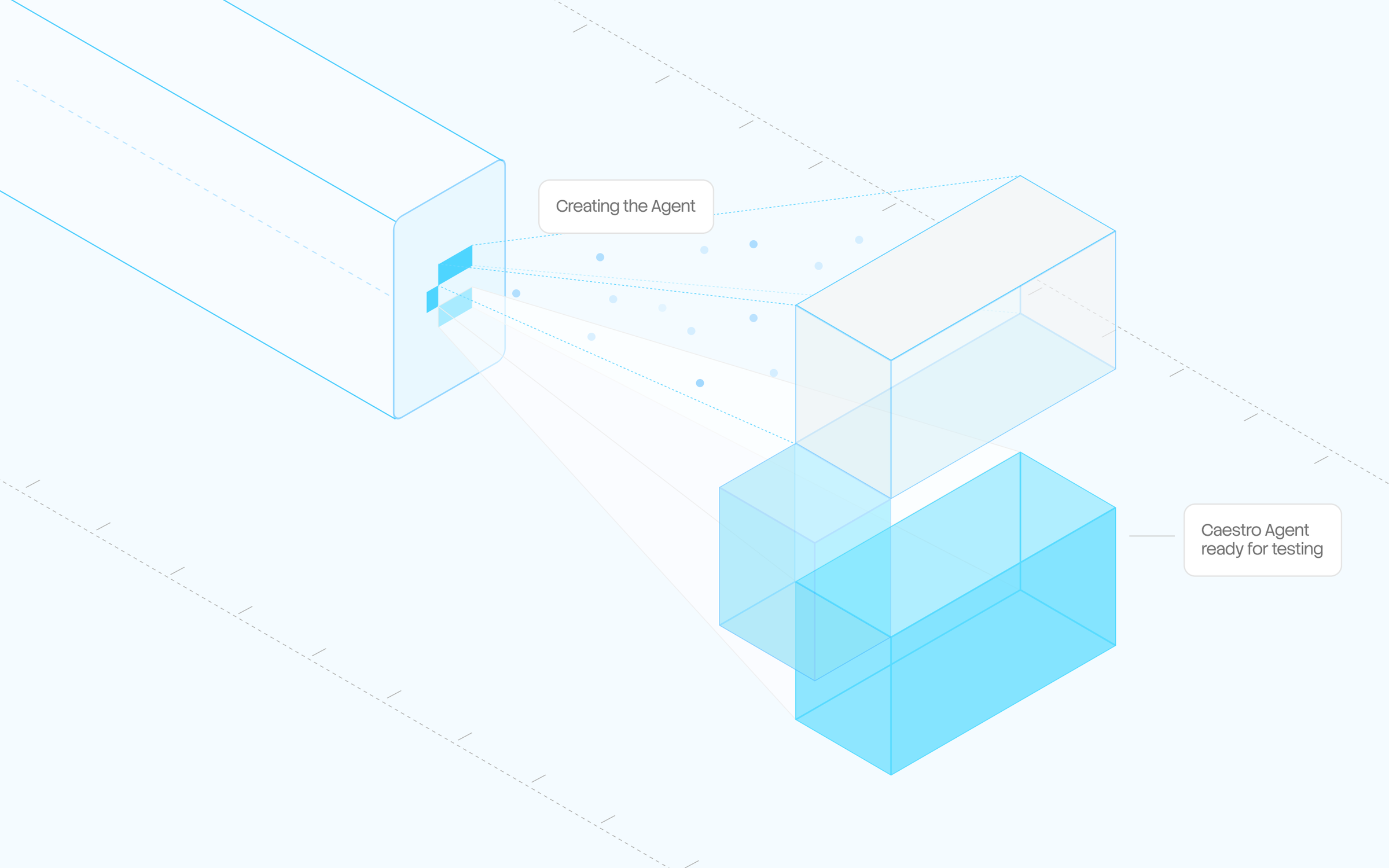
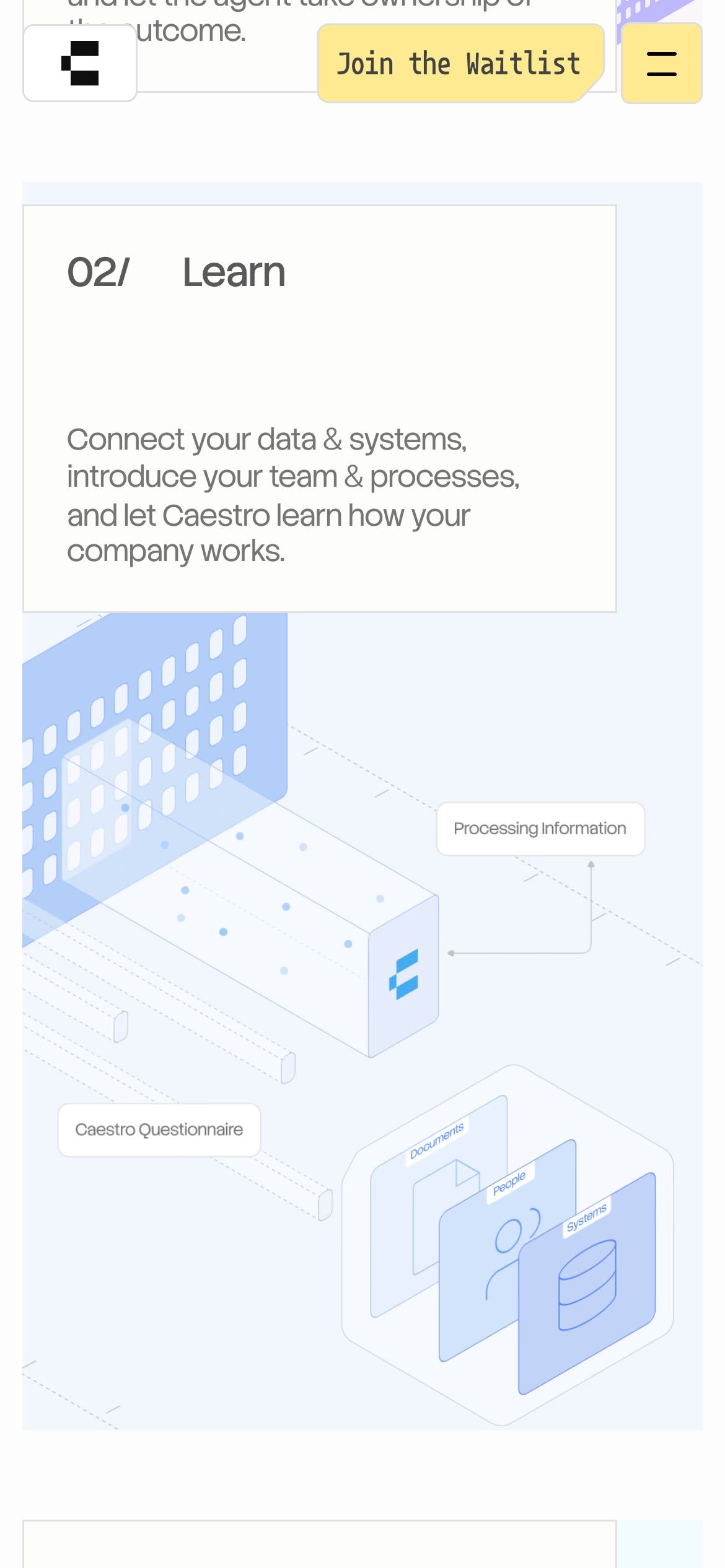
We carried the second direction through all five steps: Outcome, Learn, Design, Calibrate and Deploy. A reader learns the visual once and can follow it to the end.
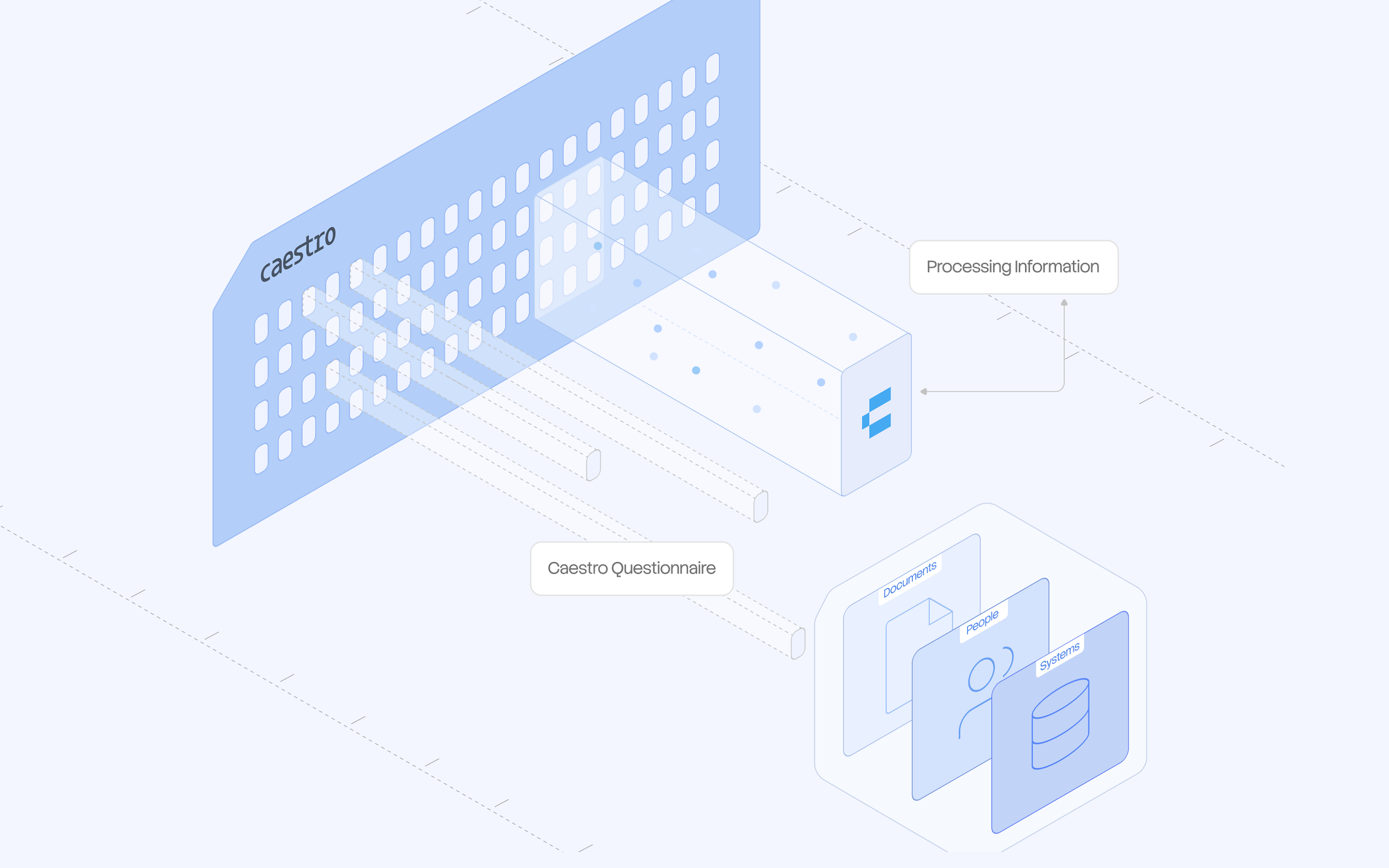
In Learn, a Caestro questionnaire sits beside the documents, people and systems the agent draws on. In the testing step, the team reviews the agent's work and corrects it before it goes live.
Every label had to make sense to someone outside the company. In review with Caestro's team, we made the labels larger and rewrote each one to say what that part does. One became Questionnaire, so it names the thing a customer fills in.

Motion
Motion only where it helps
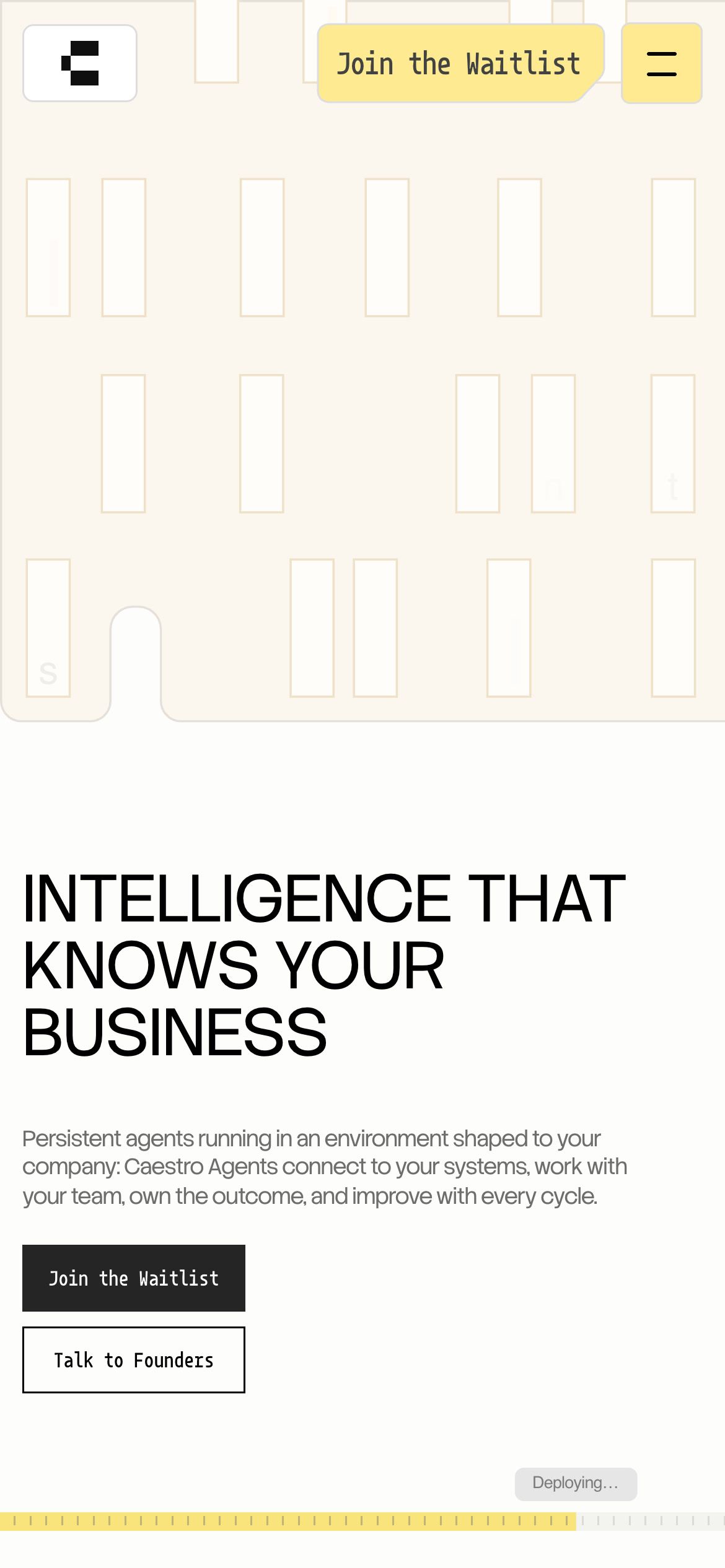
We decided where movement would help a buyer and where it would get in the way. The hero uses a simple word flip that cycles through familiar sources of company knowledge, such as SharePoint. It fits the restrained direction in the brief.
The five process diagrams stay still. Visitors read each step at their own pace and never wait for an animation to finish. The one interactive moment comes at the end, where visitors can play with a working punch-card machine.
Use cases
Two workflows that show where a person steps in
A buyer judges an agent by whether they can see it inside their own work. We edited Caestro's fleet and invoice examples into two workflows that follow the same path: what the agent reads, what it does and when it hands off to a person.
In the fleet example, the agent draws on maintenance history and warranty claims, then asks the technician on site for anything the records can't tell it. In finance, it checks invoices against company policy and vendor records, then sends exceptions to the budget owner. Both let a buyer see where their own records and judgment would fit.
Trust
Deployment questions answered on the page
A business leader weighing an agent wants to know who is behind it and what happens to the company's data. We answered both before the waitlist.
Working with Hassan, we cut a text-heavy section down to three short statements about the team's experience, so a reader takes them in at a glance. An Enterprise & Trust section keeps Caestro's commitments on data, review and ownership in one place for readers weighing deployment.
Waitlist
A waitlist that opens the sales conversation
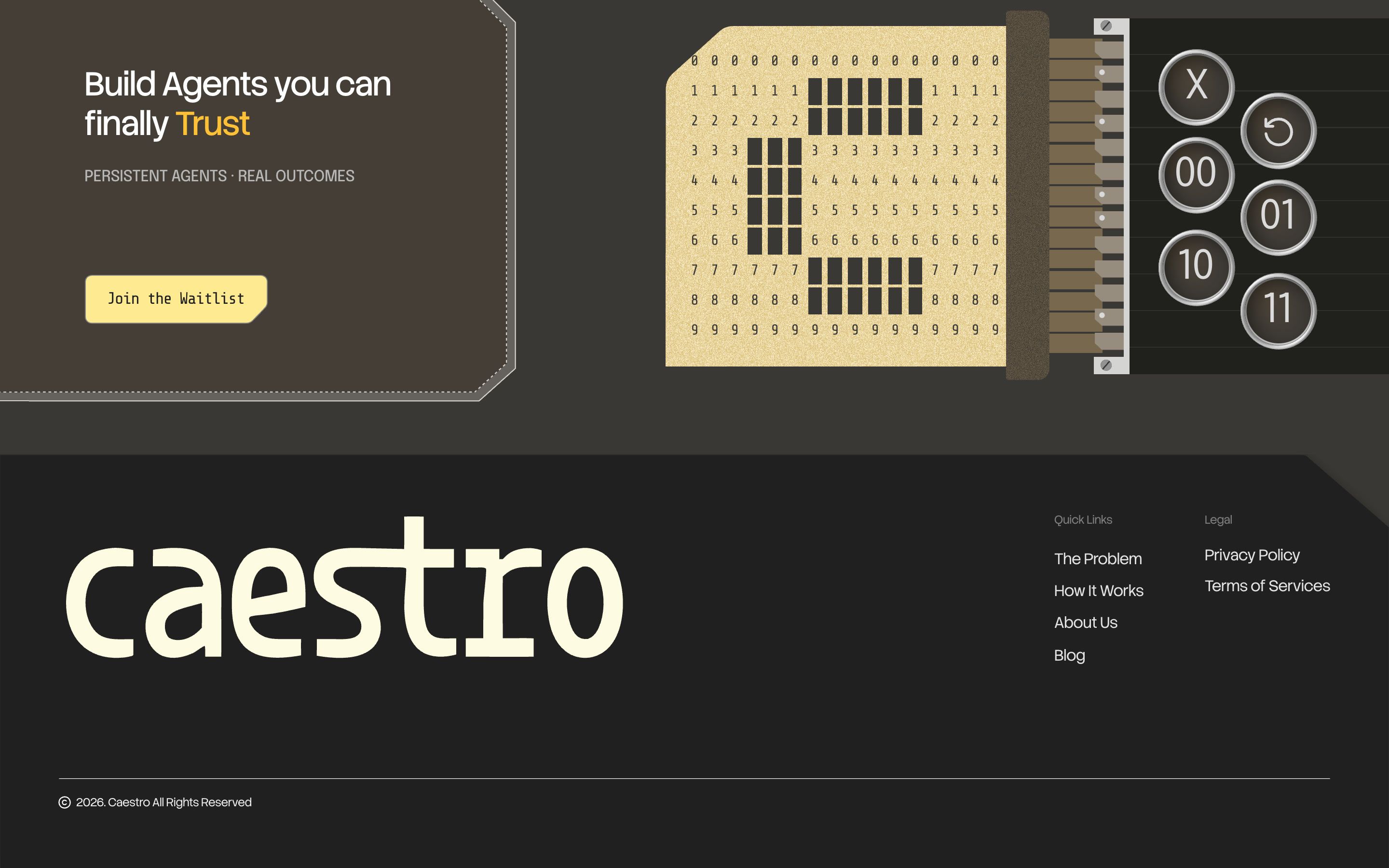
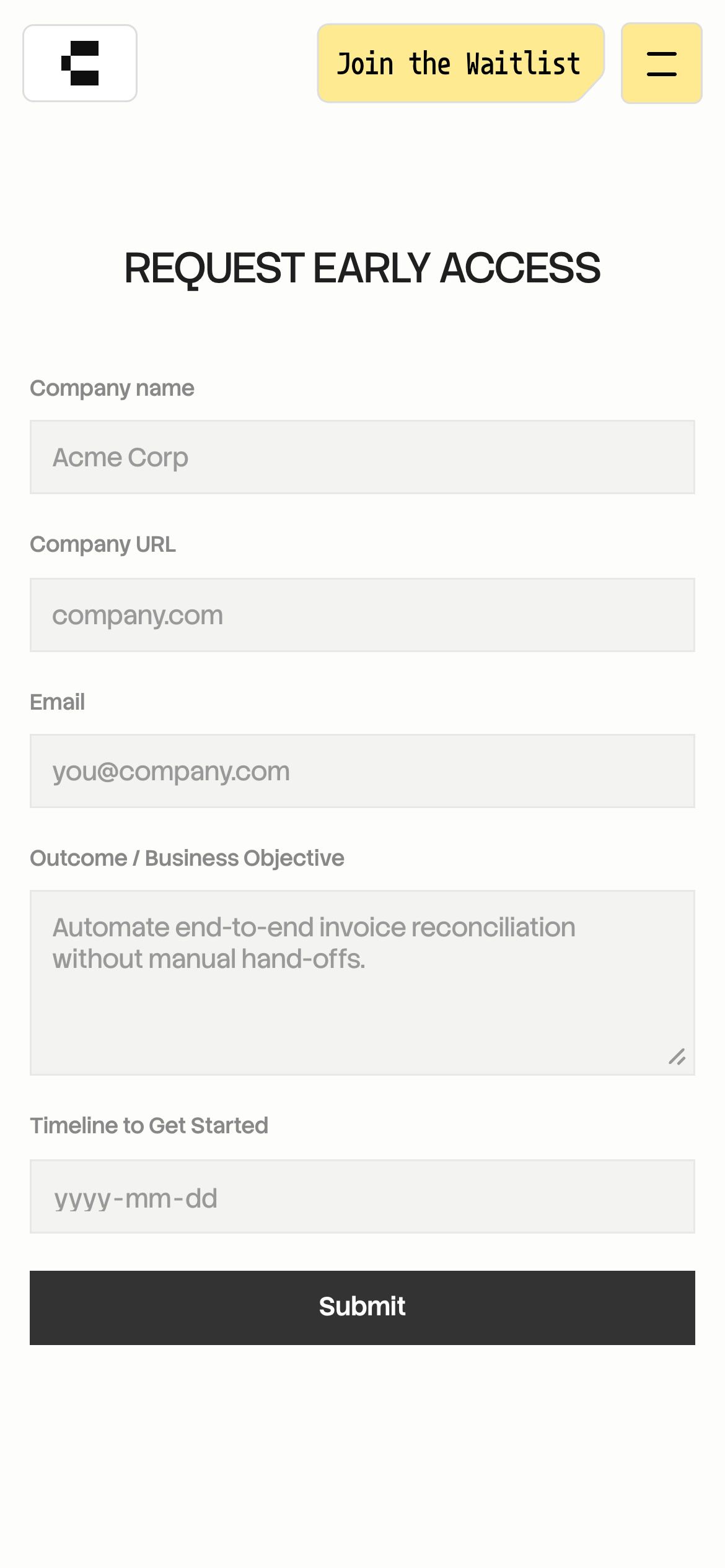
We asked Caestro where waitlist signups should go. That conversation led to a branded form that asks for the company name, website, email, the business goal and a desired start date. Each signup tells the founders which job a company wants an agent to do, and when.
The form sits beside the punch-card machine at the bottom of the page, so visitors can join from the same spot where they try the machine.
Results
A launch site in two weeks
We handed over the finished Framer build on November 10, two weeks after onboarding, with desktop, tablet and mobile layouts. Caestro published it the next day, in time for Hassan's investor follow-ups.
A blog Caestro runs on its own
We built the archive and article template in Framer and recorded an editing walkthrough. Caestro's team publishes a new article from a single CMS entry that fills both the article page and its listing in the archive.
A product story a buyer can follow in one scroll
A business leader moves from the sales-call problem to the five steps, the two workflows and the trust statements in order. By the end, they can see what Caestro does, where their records fit and where their people stay in charge.
Every signup arrives with a job attached
Each waitlist entry names a business goal and a start date. Caestro's team connected the form to a shared sheet, so the founders can see what prospective customers want an agent to do before the first call.
Book a Call
Tell us what you’re building.
We’ll help you map the right scope, team, timeline, and next steps.
Trusted by Startups & Enterprises Worldwide