
Most founders fail to raise capital. This failure rarely happens because their product is flawed. It happens because they do not understand the rules of the game. You are walking into rooms with investors who execute venture deals for a living. If you do not know the mechanics of a term sheet, you are at a massive disadvantage.
Reading the best books on fundraising for startups is the fastest way to close that knowledge gap.
These books break down decades of Silicon Valley experience into actionable playbooks. They pull back the curtain on how investors evaluate startups. They show why VCs pass on good ideas. They reveal what investors actually need to hear before writing a check.
Below, we detail the most essential reading material for founders preparing to raise capital.

Quick Takeaways:
Start with the mechanics: Read Venture Deals first to learn the technical language of term sheets.
Understand the investor: Books like Secrets of Sand Hill Road explain how VCs build their own funds.
Nail the delivery: The Art of Startup Fundraising will help you structure the perfect pitch.
Master the mindset: The Hard Thing About Hard Things prepares you for the inevitable rejections.
Look beyond VCs: For early stages, Angel Investing provides the exact playbook for high-net-worth individuals.
Why the Best Books on Fundraising for Startups Give You an Edge
Venture capital operates on its own set of rules. It has its own vocabulary and economic models. A good business does not always equal a good venture investment.
When you read top startup fundraising books, you learn to see your company through the eyes of an investor. You stop pitching feature lists. You start pitching venture-scale returns. Understanding fundamental concepts like dilution, liquidation preferences, and board composition prevents you from signing a bad deal. A bad deal can cripple your startup later.
More importantly, it builds confidence. Investors can immediately sense when a founder understands the financial mechanics of their startup. They know when someone is simply reciting numbers. This fluency is often the deciding factor in securing a lead investor.
Top Books for Understanding Venture Capital Mechanics
The technical side of fundraising is where most first-time founders make critical mistakes. These selections focus heavily on the structural elements of venture deals so you never negotiate blindly.
1. Venture Deals by Brad Feld and Jason Mendelson
If you only read one book before raising capital, make it this one. Brad Feld and Jason Mendelson wrote this to clarify the often confusing world of term sheets and legal jargon. Both are veteran venture capitalists.
Venture Deals: Be Smarter Than Your Lawyer and Venture Capitalist explains every clause of a standard venture term sheet. It highlights what matters, what does not, and where founders usually stumble. The authors cover critical concepts like pre-money vs. post-money valuation, vesting schedules, and protective provisions in clear, simple language. Understand how to talk about valuation at pre-seed before negotiating.
Pro Tip: Do not just read this book. Treat it as a reference manual. Keep it on your desk while reviewing your first term sheet.
2. The Business of Venture Capital by Mahendra Ramsinghani
To successfully pitch a VC, you first need to understand how their business works. The Business of Venture Capital provides a comprehensive masterclass. It explains how venture funds are raised, structured, and managed.
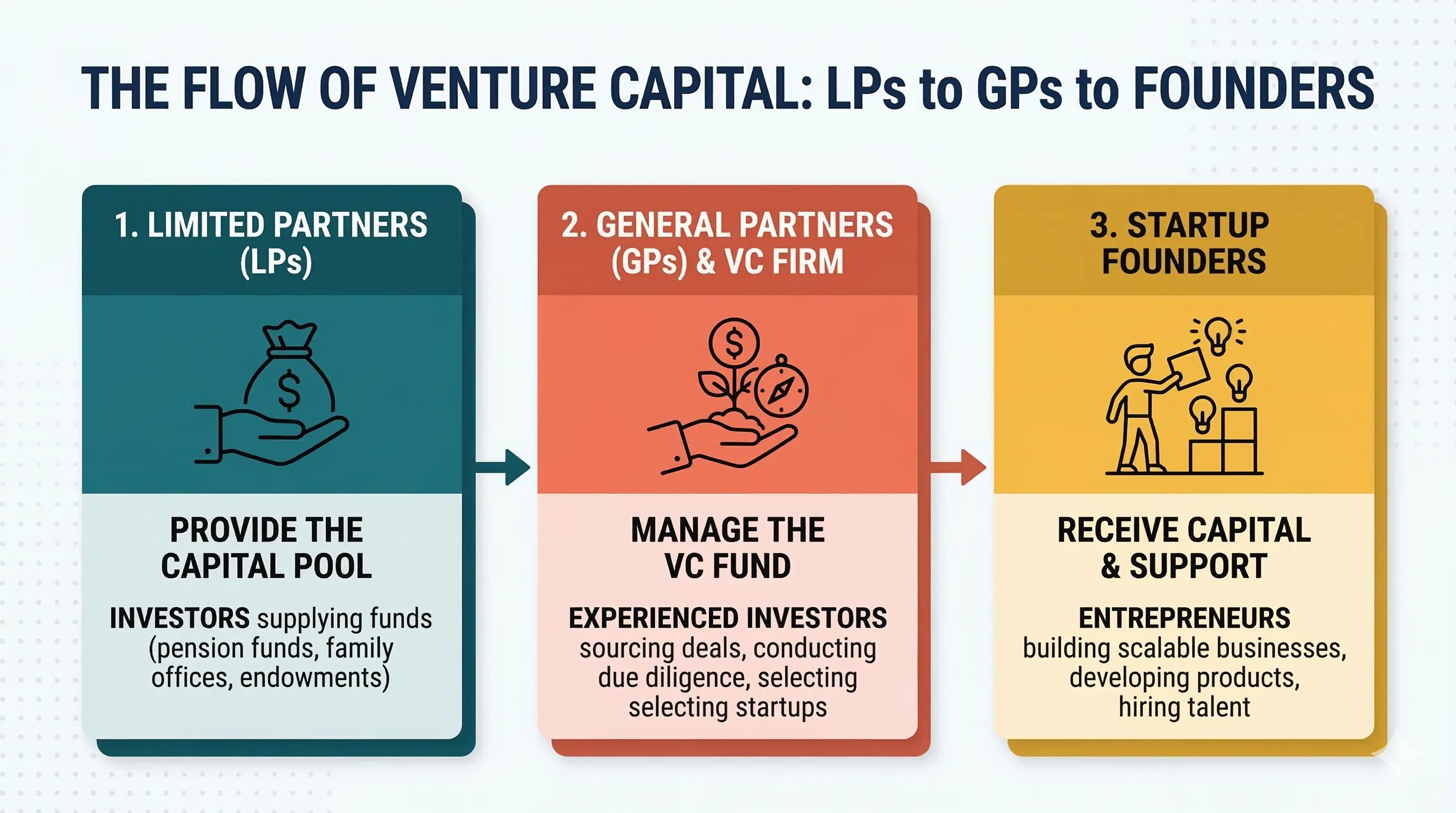
Ramsinghani details the fund lifecycle. He explains how general partners secure capital from limited partners to how they evaluate potential exits. When you understand the pressure VC partners face to return capital quickly, you can align your pitch to solve their exact problems.
Best Books on the VC Mindset and Industry
A great pitch deck gets you a meeting. But understanding the psychology of the person across the table wins the deal. These books look at how investors think and evaluate risk. Start by building the right pre-seed pitch deck slides.
3. Secrets of Sand Hill Road by Scott Kupor
Scott Kupor is the managing partner at Andreessen Horowitz. He offers an unprecedented look into one of Silicon Valley's most powerful entities. Secrets of Sand Hill Road: Venture Capital and How to Get It clarifies the inner workings of top-tier VC firms.
Kupor explains why VCs must swing for the fences. They need to fund companies capable of returning their entire fund. He covers governance issues and the reality of board dynamics after the deal is signed. He also explains how early-stage investors think differently from late-stage growth funds.
4. Mastering the VC Game by Jeffrey Bussgang
Jeffrey Bussgang provides a unique dual perspective. He has sat on both sides of the table as an entrepreneur and a venture capitalist. Mastering the VC Game: A Venture Capital Insider Reveals How to Get from Start-up to IPO on Your Terms is a playbook for founder-VC alignment.
Bussgang breaks down what investors look for at various stages of a company's growth. He also includes candid insights from successful founders and leading VCs. This offers a balanced view of how to build a productive partnership rather than an adversarial relationship.
Books on Pitching and Strategy
You can have the best technology in the world. But if you cannot communicate its potential clearly, you will not get funded. These selections focus on narrative, structure, and identifying the right investors.
5. The Art of Startup Fundraising by Alejandro Cremades
Alejandro Cremades is a serial entrepreneur who has successfully navigated the fundraising maze. He offers a highly practical, modern guide. The Art of Startup Fundraising covers the entire journey, from determining if you actually need to raise capital to closing the round.
This book shines in its tactical advice. Cremades provides clear blueprints for structuring compelling pitches and creating investor-ready decks. He also addresses modern alternatives like equity crowdfunding and syndicates. This makes it highly relevant for today's diverse funding market.
6. Crack the Funding Code by Judy Robinett
Crack the Funding Code: How Investors Think and What They Need to Hear to Fund Your Startup is particularly valuable for founders outside of major tech hubs.
Robinett outlines the specific criteria angel investors and VCs use to evaluate a deal. She emphasizes the importance of building relationships before you need money. She provides clear strategies for accessing funding networks regardless of your location.
Books for Angel Investment and Early Stage
Not every founder is ready for institutional venture capital. If you are raising a pre-seed round, you need to understand angel investors. Their motivations differ drastically from professional fund managers.
7. Angel Investing by David S. Rose
This book is written primarily for people looking to invest their own money. However, Angel Investing: The Gust Guide to Making Money and Having Fun Investing in Startups is mandatory reading for early-stage founders seeking that same capital.
David S. Rose explains the emotional and financial drivers behind angel investing. When you understand why an angel writes a check (often driven by passion or a personal connection to the problem), you can dramatically improve your pitch in early meetings.
8. Angel: How to Invest in Technology Startups by Jason Calacanis
Super-angel Jason Calacanis reveals exactly what aggressive early-stage investors are looking for in this guide. Calacanis shares his criteria for spotting outliers. He also shares the red flags that cause him to pass instantly. Reading this helps you avoid amateur mistakes that instantly kill your credibility with seasoned angels.
Fundraising Books Comparison
Book Title | Best For | Core Focus | Key Insight |
|---|---|---|---|
Venture Deals | First-time founders raising VC | Term sheets & legal mechanics | Clarifies the technical jargon of venture contracts |
Secrets of Sand Hill Road | Growth-stage founders | VC firm economics | Explains the LP/GP dynamic driving VC behavior |
The Art of Startup Fundraising | Founders finalizing their deck | Pitch structure & strategy | Provides actionable templates for investor presentation |
Angel Investing | Pre-seed founders | Angel investor psychology | Reveals why high-net-worth individuals write early checks |
Essential Reading for Founder Resilience
Fundraising is an emotional grind. You will face endless rejection. Maintaining the psychological stamina to lead your company through the process is critical.
9. The Hard Thing About Hard Things by Ben Horowitz
This book is not exclusively about raising capital. But The Hard Thing About Hard Things: Building a Business When There Are No Easy Answers is essential for surviving the process. Ben Horowitz shares visceral, honest stories about the brutal realities of running a startup. He discusses grueling fundraising efforts in down markets.
His experiences highlight the resilience required to pitch investors while simultaneously managing a distressed company. It offers invaluable perspective for founders navigating stressful fundraising rounds.
Strengthen Your Pitch Execution
You can read all the best books on fundraising for startups. You can master the terminology and understand the VC mindset perfectly. But when you finally secure that meeting, your presentation materials must look as professional as your financial model.
Often, founders have brilliant ideas but deliver them in confusing, poorly designed slides. If your narrative is strong but your visual execution is disorganized, investors will assume your product execution will be disorganized too.
This is a common execution gap. If your founding team is highly technical but lacks design resources, Zyner can bridge it. Our unlimited design subscription provides startups with dedicated our design team who specialize in fundraising pitch decks. We understand the pacing, visual hierarchy, and clarity required to make an investor immediately grasp your value proposition. We let you present your startup with the polish of a Series B company while still at the pre-seed stage.
Stop Reading and Start Raising
The books listed above will give you the theoretical framework to succeed. But theory only gets you so far. The only way to truly master fundraising is to enter the arena, take the meetings, and learn from the rejections.
Select two books to start with. Read one on mechanics, like Venture Deals. Read another on execution, like The Art of Startup Fundraising. Read them, refine your narrative, build your materials, and start booking conversations. Start your journey by picking up these best books on fundraising for startups today.
Frequently Asked Questions
What is the best book for startup founders raising capital?
For absolute beginners, Venture Deals: Be Smarter Than Your Lawyer and Venture Capitalist by Brad Feld is universally considered the best starting point. It translates complex legal terminology into language any founder can understand.
How do I learn about venture capital?
The fastest way to learn about venture capital is by understanding the business model of VCs themselves. Reading Secrets of Sand Hill Road or The Business of Venture Capital explains how fund managers raise their own money and what metrics they need to hit.
What should I read before raising seed funding?
Before raising seed funding, focus on understanding early-stage investors. Angel Investing by David S. Rose provides excellent insight into the psychology of individual investors who typically fund pre-seed and seed rounds.
Are there books on how to write a term sheet?
Yes. Venture Deals devotes several core chapters strictly to breaking down the anatomy of a term sheet. It ensures founders understand the economic implications of every single clause.
How can I understand the VC mindset?
To understand the VC mindset, you must study the pressures they face daily. Books like Mastering the VC Game offer insider perspectives on how investors calculate risk, evaluate founding teams, and project massive returns to satisfy their own limited partners.