

Here's something most founders don't realize when they sit down to build their first deck: a pitch deck is not a business plan. It's not a product demo. It's not a document.
It's a story. And the best ones follow a structure that goes back a lot further than Silicon Valley.
Understanding what a pitch deck actually is, and what it's trying to do, changes how you build one entirely. So let's get into it.
Quick Takeaways
A pitch deck is a short presentation (typically 15 to 24 slides) that gives investors an overview of your startup and its opportunity
The goal is not to close an investment. It's to earn a follow-up meeting
A strong pitch deck follows a narrative arc, not just a checklist of business facts
There are three types you'll encounter: elevator decks, demo day decks, and full investor meeting decks
Six qualities separate the decks that land meetings from the ones that don't: story structure, clarity, human-centeredness, visual quality, traction, and business fundamentals
A pitch deck serves a dual purpose: it communicates your story to investors and forces you to understand your own company from the outside
Not every company needs a pitch deck. It depends on whether you're building a venture-fundable business
What Is a Pitch Deck?
A pitch deck is a short, concise presentation used to give potential investors a quick overview of your business. It covers your company's mission, business model, market opportunity, product or service, and team. Most run between 15 and 24 slides and are used during investor meetings, accelerator applications, and demo days.
But that definition only tells you what a pitch deck contains. It doesn't tell you what a pitch deck is.
Think of it this way: a pitch deck is a summary of your company's story. If your story is complex and takes 25 slides to tell clearly, that's fine. If you can do it in 10 without leaving anything important out, even better. The slide count isn't the point. The clarity and momentum of the story is.
The deck's job is to blend two things that feel like opposites: storytelling and business logic. On one side, you're building excitement, creating narrative tension, making investors feel something. On the other side, you're answering a very rational, very cold question: will this company make me money?
A great pitch deck does both at once.
What Is the Purpose of a Pitch Deck?
The primary purpose is to get a follow-up meeting with an investor. Not to close a deal. Not to explain every detail of your business. Just to make a compelling enough case that a conversation is worth having.
This is a more nuanced goal than it sounds. Your deck might be emailed cold, reviewed at 10pm by someone who has never heard of you. Or it might guide a 30-minute in-person meeting. The same deck often has to work in both contexts, which is why clarity matters so much.
Beyond fundraising, a pitch deck serves a dual purpose. On the investor side, it gives them enough information to evaluate whether your company fits their criteria. On your side, building the deck is itself a forcing exercise. Writing a clear, compelling deck means you've had to articulate your market, your problem, your solution, your growth story, and why your team can execute. Founders who struggle to write a clean deck almost always discover something fuzzy in their own thinking while trying to write it.
You'll also use a pitch deck at multiple points in your company's life. Accelerator programs ask for decks during initial screening. Demo days require them. And whenever you decide it's time to raise external capital, your deck becomes the filter that determines whether you get in the room.
Does Your Company Even Need a Pitch Deck?
Before getting into what goes in a pitch deck, it's worth asking whether you need one at all. Not every company is venture-fundable, and a deck built for the wrong audience won't help.
The companies that typically raise venture capital are fast-growth, highly scalable businesses. Consider how Airbnb scales without buying properties, or how Uber opened operations in new cities with a tiny local team. Software businesses, marketplaces, and platforms can grow exponentially without proportionally growing headcount or costs. When Facebook acquired Instagram in 2013, the company had 250 million users and just 13 employees. That's what makes software-based businesses venture-backable: they're infinitely scalable.
A services business, a development agency, or a consultancy scales by adding people. Margins are capped because you're selling time, not software. These are often excellent businesses, but they're unlikely to attract venture capital at an early stage.
If you're building something scalable and transformative and you need outside capital to accelerate it, you need a pitch deck. If you're not sure whether your business is venture-fundable, that question is worth resolving before you spend weeks building a fundraising presentation.
The Three-Act Structure: How to Think About Your Pitch as a Story
This is where most pitch deck guides stop short. They give you a list of slides without explaining why the order matters or how to make an investor actually feel something while reading.
The answer comes from storytelling.
Most stories, including films, follow a three-act structure. Act I establishes the world and the problem. A plot point jolts the story in a new direction. Act II raises the stakes and narrows the possibilities. A second plot point leads into the climax. Act III is the resolution.
Your pitch deck maps onto this structure directly.
Act I (Setup): Your problem and status quo slides. You're establishing the world as it exists today, with all its friction and failure points. The goal is to make investors believe in the universe you're describing. Ground everything in recognizable reality.
Plot Point 1 (Your Solution): This is the turn. You've made the audience feel the problem. Now you introduce the hero: your product. The story pivots. Possibilities open up. The investor starts asking: what if this actually works?
Act II (Raising the Stakes): Your product takes shape. Market size slides show how large the opportunity is. Competition slides show what already exists and why your approach wins. Traction slides prove the story isn't theoretical. Maybe the twist here is an unexpected distribution channel, or a competitive moat no one else has built.
Climax (Team and Ask): At this point, the investor is as engaged as they're going to be. This is when you introduce the team and make the ask. Timing the ask at the peak of engagement isn't accidental. It's why the team slide belongs near the end, not the beginning.
Not every deck follows this exact sequence. But the underlying principle holds: your slides should pull the investor forward, not just inform them. Each section should make the next one feel necessary.
Pro Tip: Think about what your "plot twist" is. For Airbnb, it was the insight that people would willingly rent out their homes to strangers. For Uber, it was proving a city could be opened with three employees and a few hundred drivers. What's the surprising truth in your story that an investor won't see coming?
What Each Act Should Look Like: The Design Layer
Most articles about pitch deck structure stop at the content. This one won't.
Because here's what doesn't get said enough: the design of each act should match the emotional job that act is doing. Content and design aren't separate decisions. A well-structured narrative delivered through cluttered, inconsistent slides undermines every word on the page.
Here's how to think about design at each stage of the arc:
Act I: Problem and Status Quo slides
These slides need to feel grounded. Clean, minimal layouts. High-contrast typography. Data presented plainly without decoration. The visual tone here is serious and clear, because the job is to make investors believe in the problem, not be distracted by a flashy layout. Airbnb's Pitch Deck kept its early slides almost entirely text-and-number-based, which let the size of the opportunity land without visual noise getting in the way.
Plot Point 1: Solution and Product slides
This is where the deck earns the right to show off. Product screenshots, interface walkthroughs, demo GIFs, before/after visuals. The design should visually "break" from the setup slides. More color, more product presence, more visual energy. The shift in design registers as a shift in the story. Investors feel it even if they can't articulate it.
Act II: Market, Traction, and Competition slides
Charts and data dominate here, but each visual should communicate one insight, not five. The most common mistake is data-dense slides that signal "we have a lot of numbers" rather than "look at what these numbers prove." One clean bar chart showing month-over-month growth does more work than three crowded tables. Uber's early investor materials focused tightly on city-by-city growth curves rather than dumping all market data at once.
Climax: Team and Ask slides
The team slide should feel human. Real photography, not LinkedIn-style headshots. A brief, specific credential for each person, not a list of companies they've worked at. The ask slide should be the cleanest, most spacious slide in the entire deck. A single number, a single use of funds breakdown, a single milestone. White space signals confidence. A cluttered ask slide signals a founder who isn't sure what they want.
Pro Tip: Run this test on your deck: cover the text on every slide and look only at the visuals. Does each act feel visually distinct from the others? If every slide looks the same, the narrative doesn't have shape. The design should do some of the storytelling work, not just hold the words.
Real Pitch Deck Examples Worth Studying
The fastest way to understand what a good pitch deck does is to read one that worked. Several famous early-stage decks are publicly available and worth studying directly.
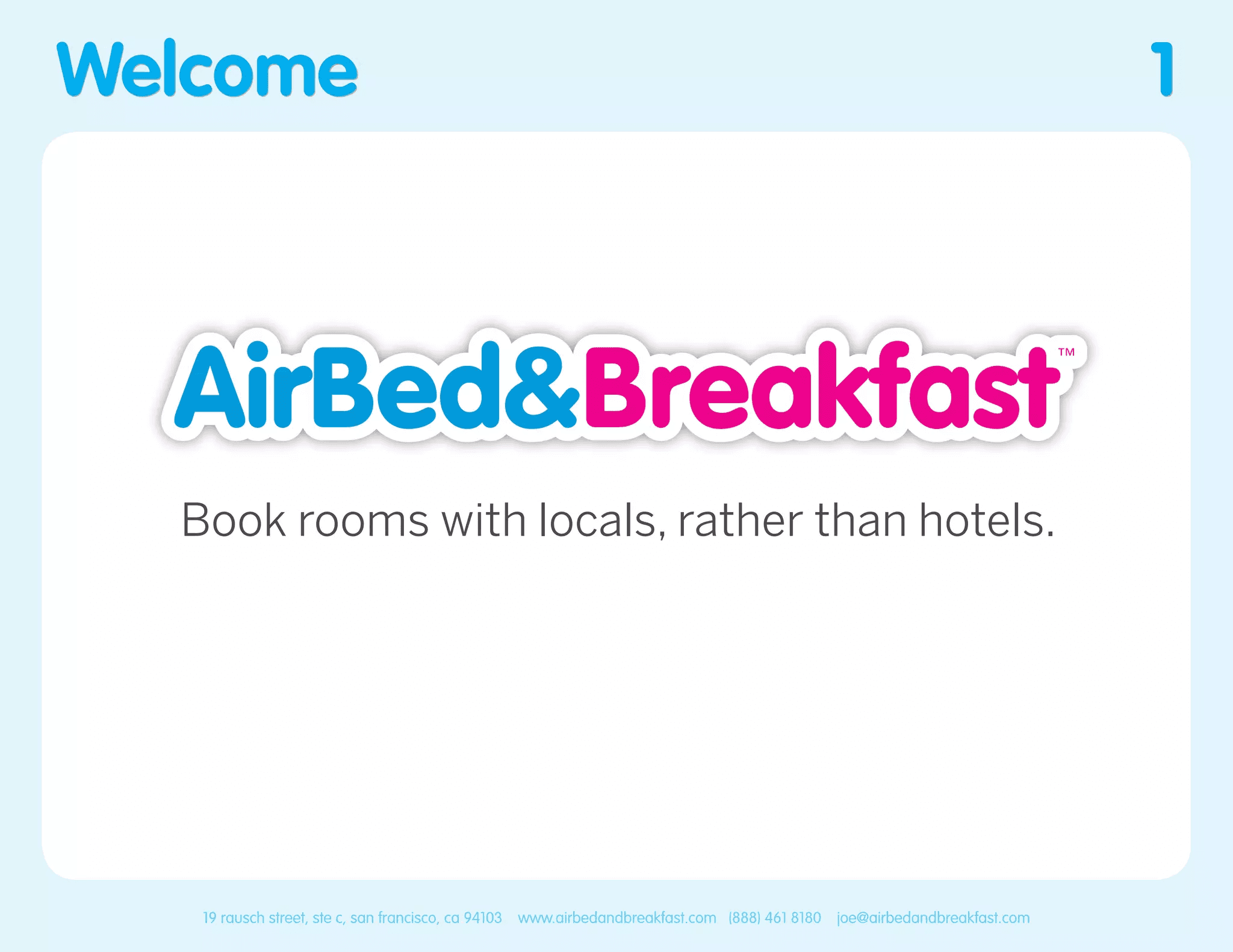
Airbnb's 2008 pitch deck is the most referenced pitch deck in startup history. It raised $600,000 at a $2.5 million valuation. The deck is 10 slides and covers the problem, solution, market size, business model, and traction in plain, direct language. What's striking today is how little design work is in it. The story carries everything.
Uber's 2008 pitch deck is shorter, just 25 slides with less text per slide than you'd expect. The most instructive part is the competitive positioning: instead of a standard 2x2 matrix, the deck positions the product on a spectrum between reliability and cost that made competitors look like compromises.
What both decks have in common: they don't try to explain everything. They make a clear case for one thing: why this, why now, why this team. Everything else gets cut.

What Is in a Pitch Deck? Core Slides Explained
Based on the three-act narrative above, here are the key sections most investor pitch decks include. These aren't rigid rules. Every company's story is different. But they're the building blocks.
Problem: The pain point your target customer experiences. Quantify it where you can. Make investors feel it.
Market overview: The broader space you're operating in and why it's large enough to matter.
Solution: Your product or service and how it directly resolves the problem from slide one.
Product and features: What you've actually built, how it works, and what the roadmap looks like.
Audience: Who specifically you're selling to and how you've identified them.
Revenue model: How you make money, including unit economics if you have them.
Traction: Evidence of progress. Revenue, users, signed customers, retention data, or strong pilot results.
Go-to-market: How you acquire customers and what it costs.
Market size: TAM, SAM, your target segment. Investors want to understand the ceiling on the opportunity.
Competition: What alternatives already exist and why your approach wins.
Team: Why this specific group of people is positioned to execute in this market.
Fundraising and use of funds: How much you're raising, what you'll spend it on, and the milestones you'll hit.
Early-stage startups without much traction lean heavily on the problem-solution fit, the market potential, and their founding insight. More mature companies shift the weight toward traction, KPIs, unit economics, and how capital accelerates growth that's already happening. The structure stays roughly the same. The emphasis shifts.
Types of Pitch Decks
The term "pitch deck" covers more ground than most founders realize. The version you email, the one you present on demo day, and the one you use in a full investor meeting are genuinely different documents.
Elevator Pitch Deck
A highly condensed version of your pitch, built to communicate the core idea in one to two minutes. Focus on the essentials: problem, solution, market, traction, and use of funds. Everything else gets cut. This isn't primarily a document you hand someone to read; it's a pitch you're ready to deliver on demand.
Demo Day Pitch Deck
Slightly more detailed than an elevator deck, but still built for speed. Demo days are high-volume events where many startups present back-to-back with strict time limits. Founders typically have five minutes or fewer. Because you're presenting in a large auditorium, slides should be visual-heavy with minimal text. You are the presentation. The deck is the backdrop.
Full Investor Meeting Deck
This is the one most people mean when they search "what is a pitch deck." It's the standard investor deck: a comprehensive view of your startup for potential investors to assess whether the company is venture-backable. These decks run 15 to 24 slides and are often called "email decks" because they're sent cold to land initial meetings. The same deck can also guide an in-person meeting, helping you walk investors through traction and data that would be harder to explain verbally.
Six Qualities That Separate Strong Decks from Weak Ones
Having the right slides isn't enough. What makes one deck land meetings and another get ignored comes down to six qualities.
1. Good story structure.
The order in which you present information is nearly as important as the information itself. Slides should flow in a logical sequence that builds toward a conclusion. Any slide that feels like a detour from the story probably is.
2. Clarity.
Your deck should be understandable to someone who has never heard of your company and has no background in your industry. Technical jargon is the most common trap. If a non-expert can't follow your problem and solution slides without help, rewrite them. This isn't about dumbing things down. It's the discipline of saying exactly what you mean.
3. Human-centeredness.
The natural instinct is to spend most slides explaining your product's features. Resist it. The best product idea is meaningless if it doesn't solve a genuine human problem. Your deck should make investors feel the pain your customer experiences before you show them the solution. Quantify the pain. Show how the fix changes someone's day.
4. Compelling visuals.
People process images significantly faster than text. A visually strong deck keeps investors engaged. A wall of bullet points loses them. This doesn't mean over-designing every slide. It means making sure your visuals are doing work, not just filling space. This is a high-level document. High-level clarity beats exhaustive detail every time.
5. Traction-oriented slides.
If you have results, lead with them. Real data from real customers carries more weight than any narrative you can write. Revenue numbers, user growth, retention rates, and unit economics demonstrate that you've found, or are finding, product-market fit. Prepare to discuss any metric you include in depth because investors will ask.
6. A fundamentally strong business.
The hardest truth about pitch decks is that they reflect the health of the underlying business. Revenue growth, low churn, consistent usage, and clear product-market fit are what investors ultimately bet on. A great deck can get you in the room. A great business closes the round. Investors are looking for companies that can return 10x on their investment, and no amount of polish substitutes for evidence that the business can actually do that.
Pitch Deck vs. Pitch Book: What's the Difference?
These two terms get used interchangeably but they're not the same thing.
Pitch Deck | Pitch Book | |
|---|---|---|
Length | 15 to 24 slides | 30 to 100+ pages |
Audience | Early-stage angel investors, seed VCs | Late-stage institutional investors, investment banks |
Purpose | Secure an initial meeting | Support deep due diligence and deal-making |
Detail level | High-level story and vision | Detailed financials, cap table, legal structure |
When used | Pre-seed, seed, Series A | Series B+, M&A, IPO processes |
As a pre seed or seed stage founder, you need a pitch deck. The pitch book comes much later, when institutional investors are running full diligence and need a comprehensive reference document to share internally. Building one prematurely is a common way to spend weeks producing the wrong thing.
Common Pitch Deck Myths Worth Debunking
Founders approaching pitch decks for the first time encounter a lot of confident-sounding advice that turns out to be less useful than advertised.
"You must have exactly 10 slides."
Slide count is not the point. The story is the point. Ten slides is a useful forcing mechanism for keeping things concise, but if your company's story legitimately requires 18 slides to tell clearly, then 18 is the right answer. Padding to hit a number and cutting to hit a number are equally bad.
"Don't include an advisors slide."
This depends on your advisors. A list of names that sound impressive but have no relevant connection to your business adds nothing. But if an advisor has genuine domain expertise, a real relationship with your team, and available time to help, that's worth a slide.
"Your deck needs to be perfect before you send it."
The deck you send on day one of your fundraise won't be the deck you have six weeks later. Investor feedback will surface gaps in your story that you can't see yourself. The goal is a clear, compelling deck good enough to earn a first meeting. Ship it and iterate.
"Design doesn't matter if the business is strong."
This one is persistent, and wrong. A poorly designed deck signals poor judgment. If you can't present your own company well, why would an investor trust you to present their capital well? Design is credibility. An investor seeing your deck for the first time has no product to try, no customers to talk to, and no team to assess. The deck is the only signal they have.
What Comes After the Pitch Deck
A pitch deck is the start of a conversation, not the end of one. Once an investor reads it and agrees to a meeting, the deck moves to the background. The relationship, due diligence, and term sheet negotiation take over.
But getting to that meeting requires a pitch deck that earns it.
The founders who move fastest through a fundraise treat the deck as a serious investment, not an afterthought. They iterate on it, get outside feedback, cut the parts that don't advance the story, and make sure the design reflects the quality of the company behind it.
You don't have to do all of that yourself. Keep ownership of the story and the numbers, since you're the one defending them in the meeting, and hand off the slide design if it's slowing you down. Before you hire anyone, read how to choose a pitch deck design agency. Studios that charge per project and studios that work on a monthly subscription handle revisions differently, and you'll want revisions after your first few investor meetings.
Your pitch deck is the first version of the company's story that an investor will ever read. Make sure it tells the one you actually want to tell.
Frequently Asked Questions
What is a pitch deck in business?
A pitch deck is a short presentation founders use to communicate their startup's opportunity to potential investors, accelerators, or partners. It typically covers the problem, solution, market size, business model, traction, team, and funding ask across 15 to 24 slides. While primarily associated with fundraising, pitch decks are also used for accelerator applications, demo days, enterprise sales, and recruiting early hires.
What is the purpose of a pitch deck?
The core purpose of a pitch deck is to earn a follow-up meeting with an investor, not to close the investment directly. It also forces founders to articulate their company's story, market, and growth logic clearly enough that an outside reader can understand and believe in it. Founders who find the deck hard to write often discover genuine gaps in their own thinking, which is worth finding out before sitting in front of investors.
How many slides should a pitch deck have?
Most full investor pitch decks run between 15 and 24 slides. Elevator decks are shorter; demo day decks typically stay under 15 to fit strict time limits. The right number depends on how much space your story legitimately needs. More important than the count is whether every slide earns its place. Slides that don't advance the story or answer a question investors will have should be cut.
What is the difference between a pitch deck and a business plan?
A business plan is a long-form document, often 30 to 50 pages, covering a company in exhaustive detail: financial projections, operational structure, legal setup, and multi-year strategy. A pitch deck tells the same story in 15 to 24 slides. Pitch decks have largely replaced business plans as the primary tool for early-stage fundraising, but they require the same depth of thinking behind them. The difference is format and length, not rigor.
What is the difference between a pitch deck and a pitch book?
A pitch deck is a short investor presentation used in early-stage fundraising to secure initial meetings. A pitch book is a longer, more detailed document (often 50 to 100+ pages) used in later-stage processes like Series B raises, mergers and acquisitions, or institutional investor due diligence. Pitch books include deep financial analysis, cap table details, and legal structure documentation. For pre-seed and seed founders, a pitch deck is the right tool.